Increasing male HPV vaccination through UX research
Role
Lead Design Researcher and Project Manager
Team
1 lead designer (me), 2 junior designers, 1 PM, 1 data scientist
Duration
18 Months
Client
Global Pharma Company
(Client and Product name under NDA)
Markets
6 Southeast Asian Countries

Problem
HPV vaccine campaigns historically focused on cervical cancer, tageting women.
However (Science)
HPV affects both men and women
HPV vaccine protects against 9 high-risk HPV strains
Context
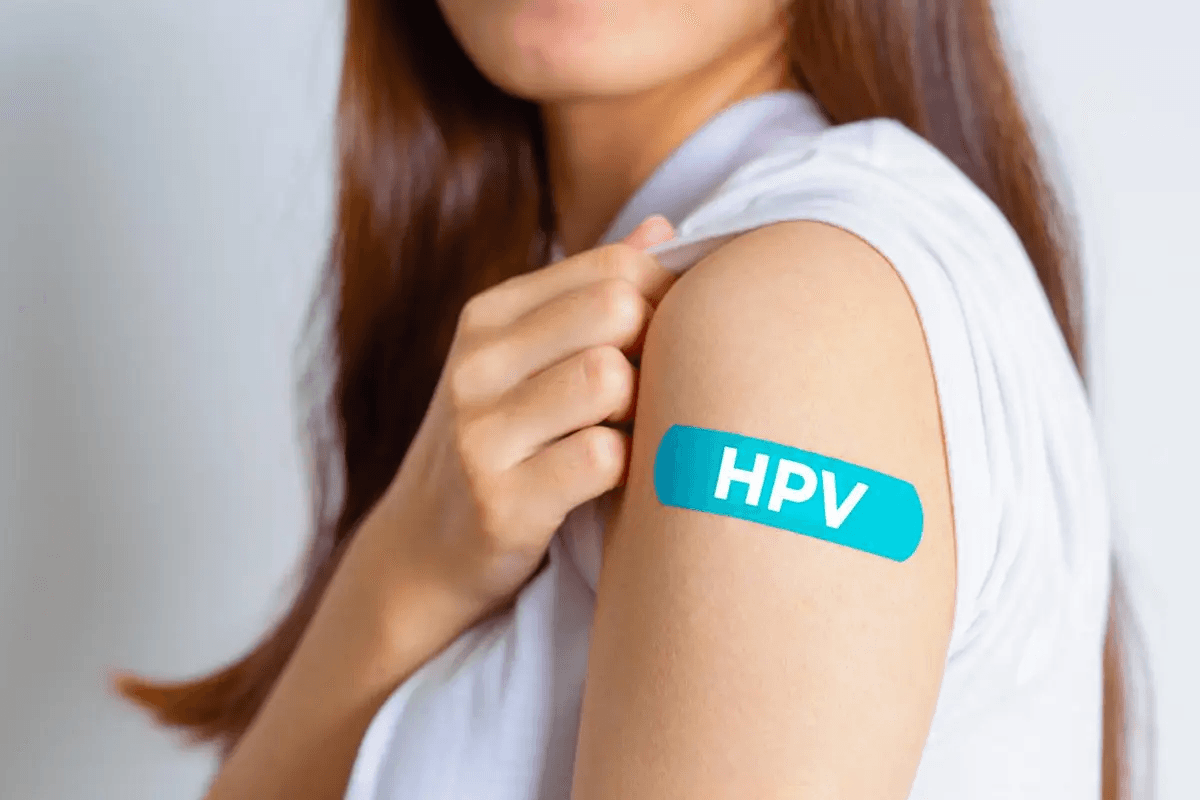
Adoption of HPV vaccine remains low among men
Studying the perception, poositioning and behavior of the market.
Research Methods
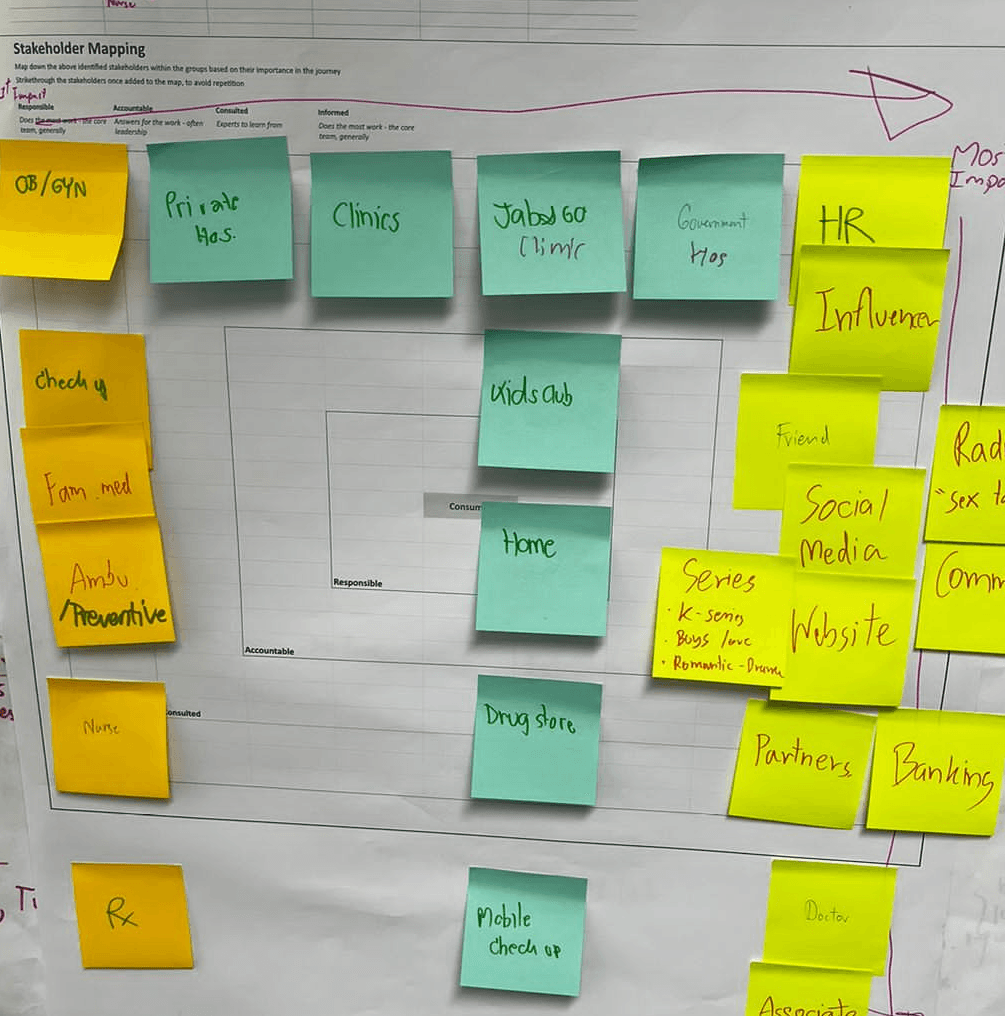
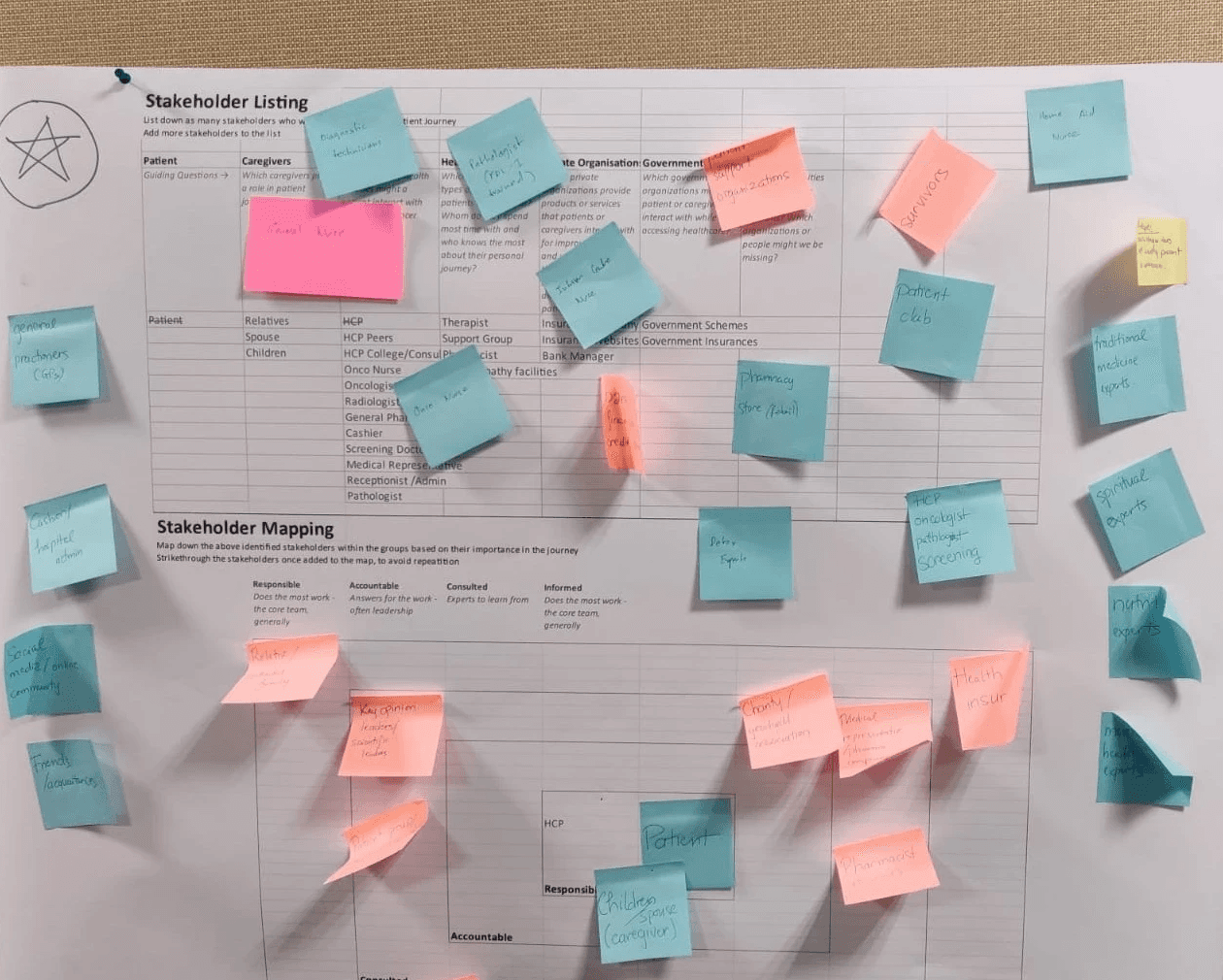
Workshopping — Journey Mapping, User Persona, Stakeholder Mapping
Co-design with executive stakeholders
Captured real on-ground insights from sales and medical leaders through structured workshops.
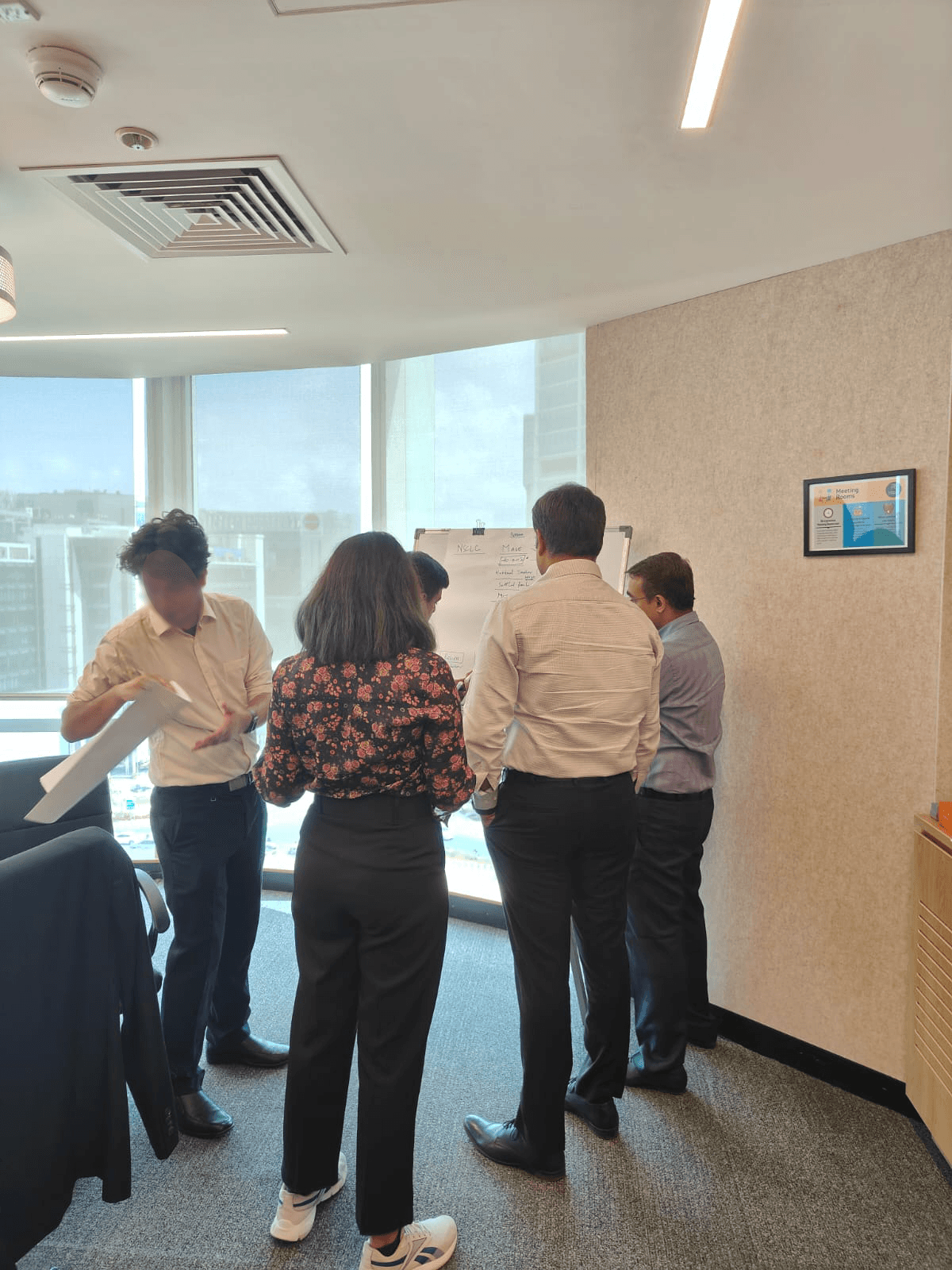
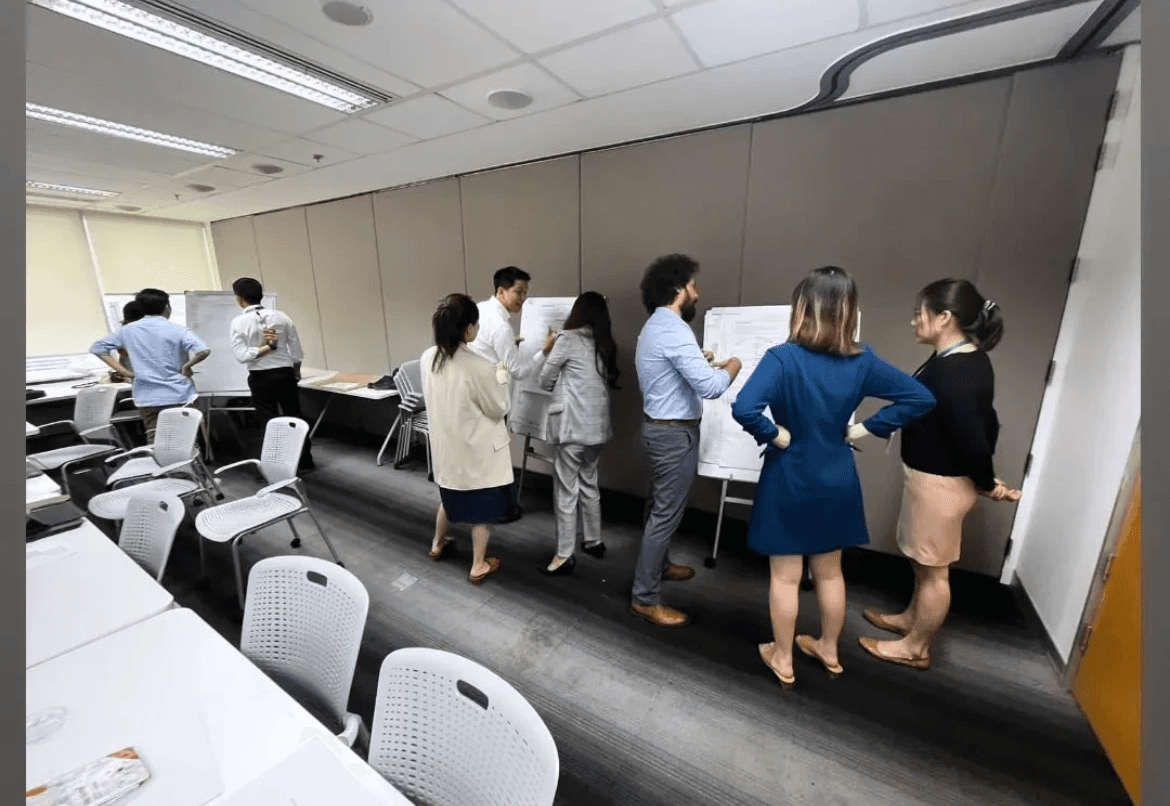
Facilitated in-person workshops across 6 countries
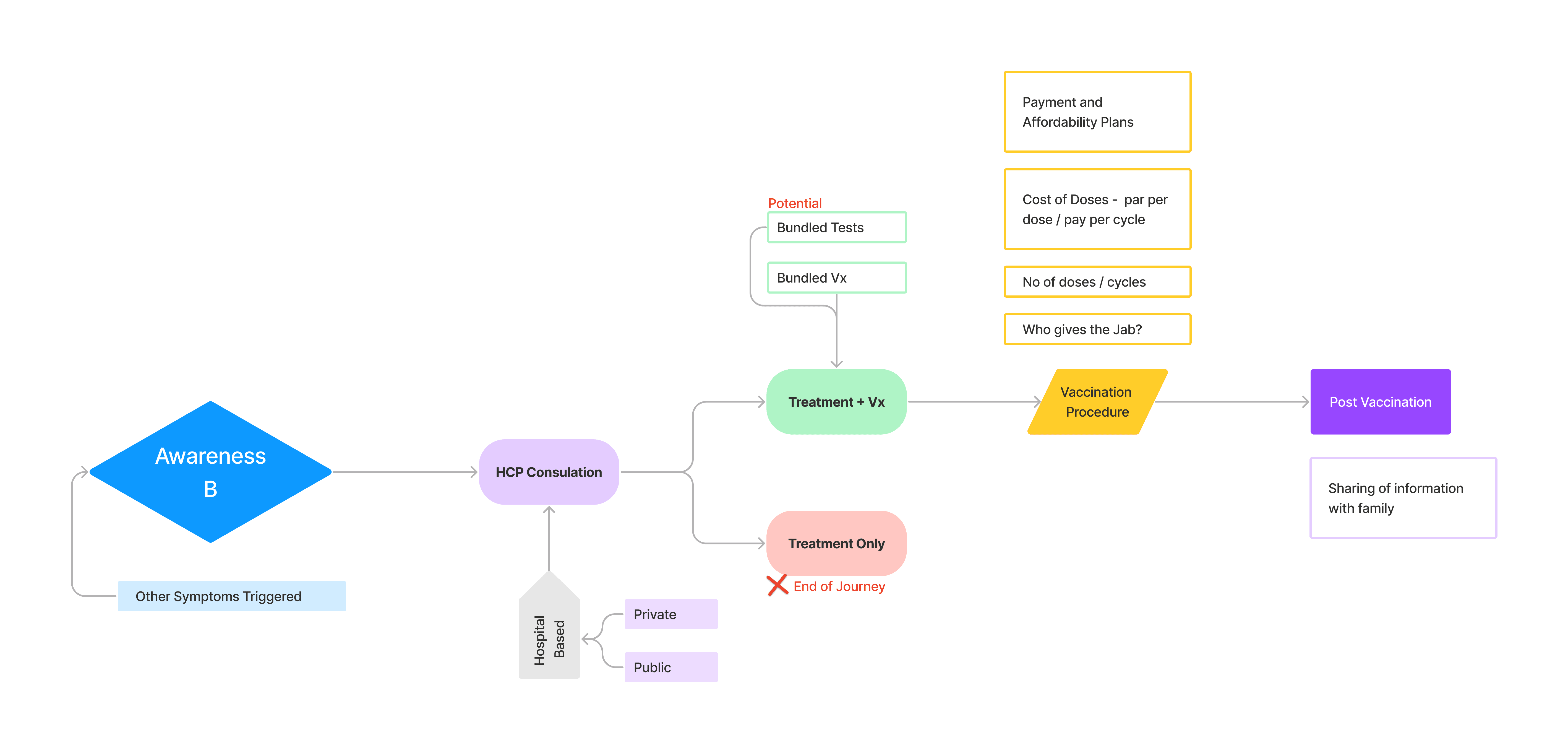
Built end-to-end journey maps with medical, sales, and marketing teams
Identified 100+ pain points and unmet needs
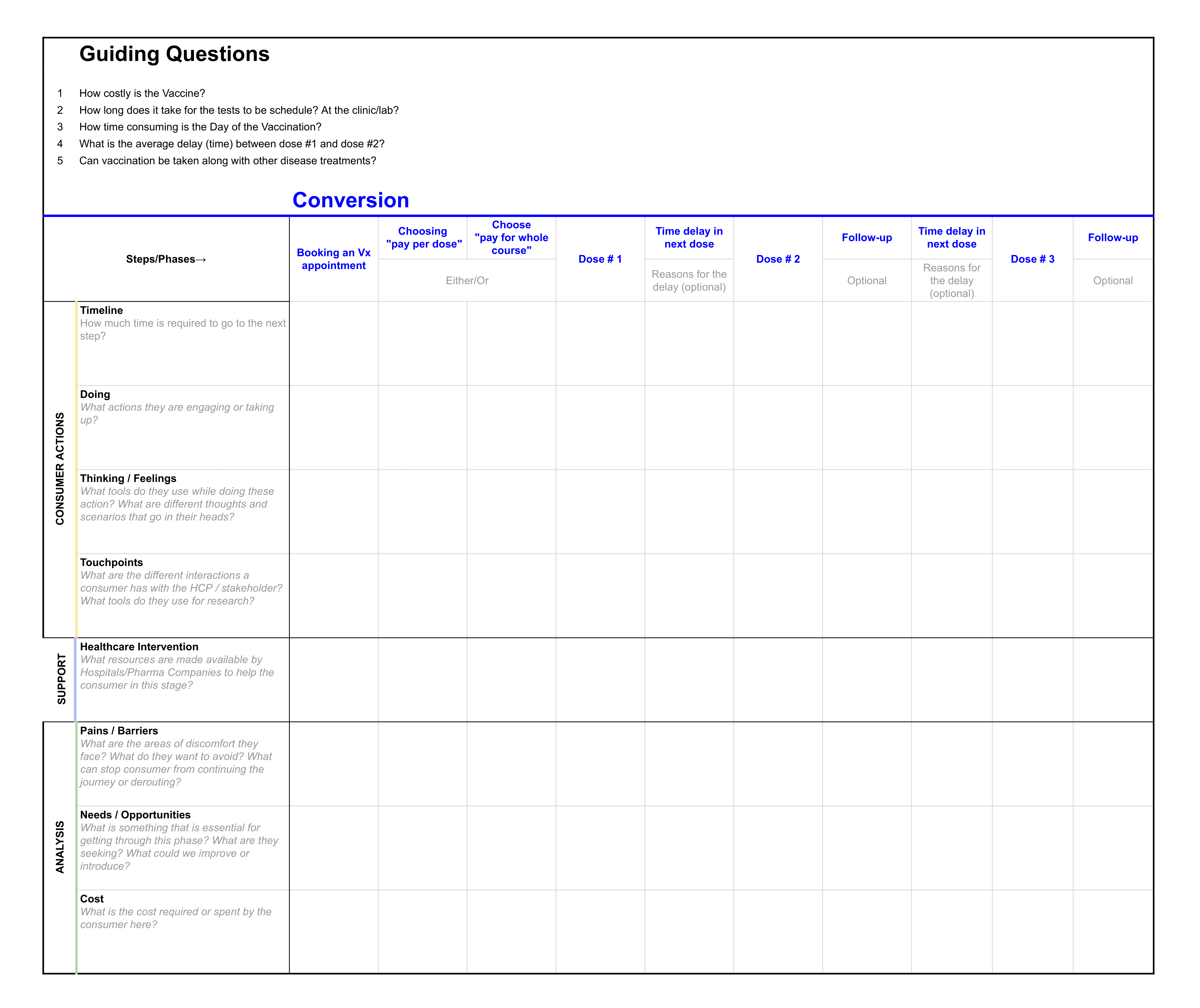
Created an Excel-based toolkit to scale across markets
Archetype, User Personas
Moved from personas to scalable archetypes
Grouped similar user behaviors into clear segments that could work across countries.
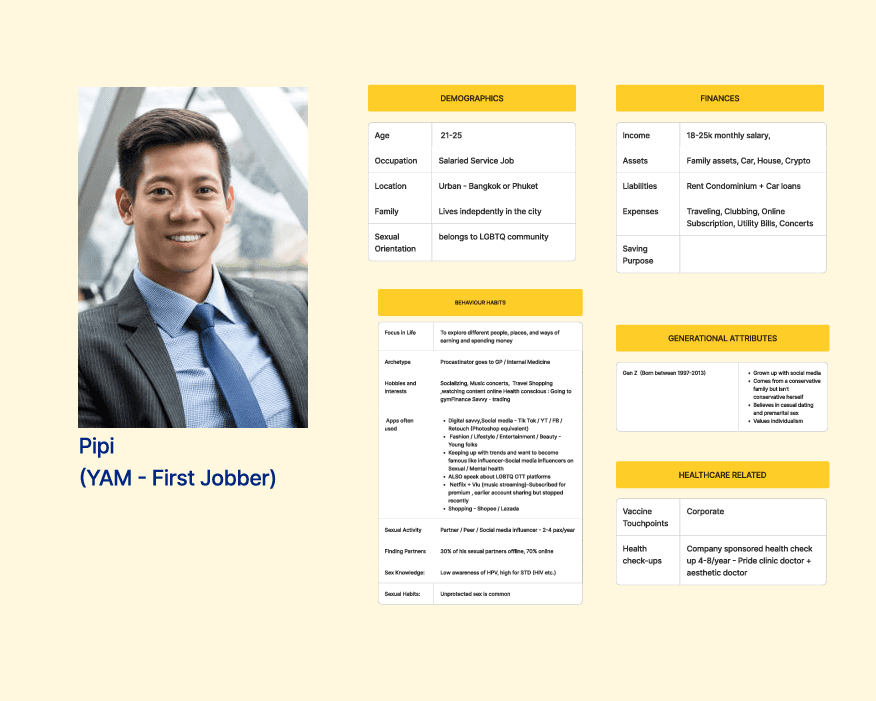
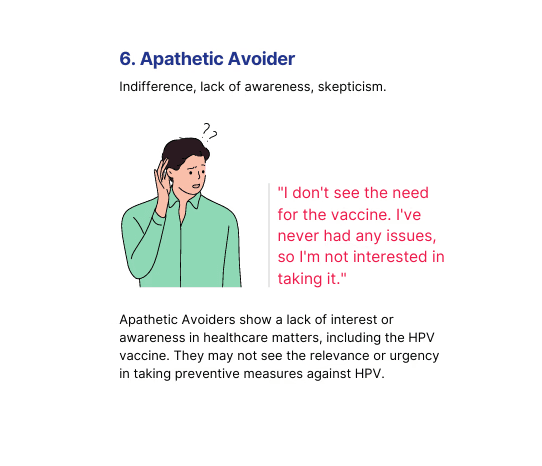
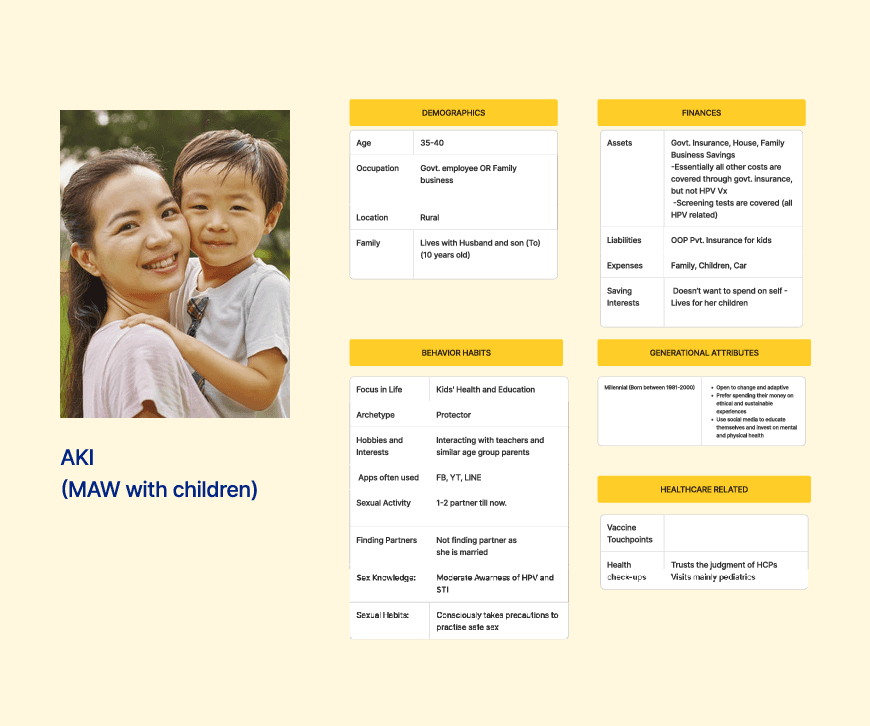
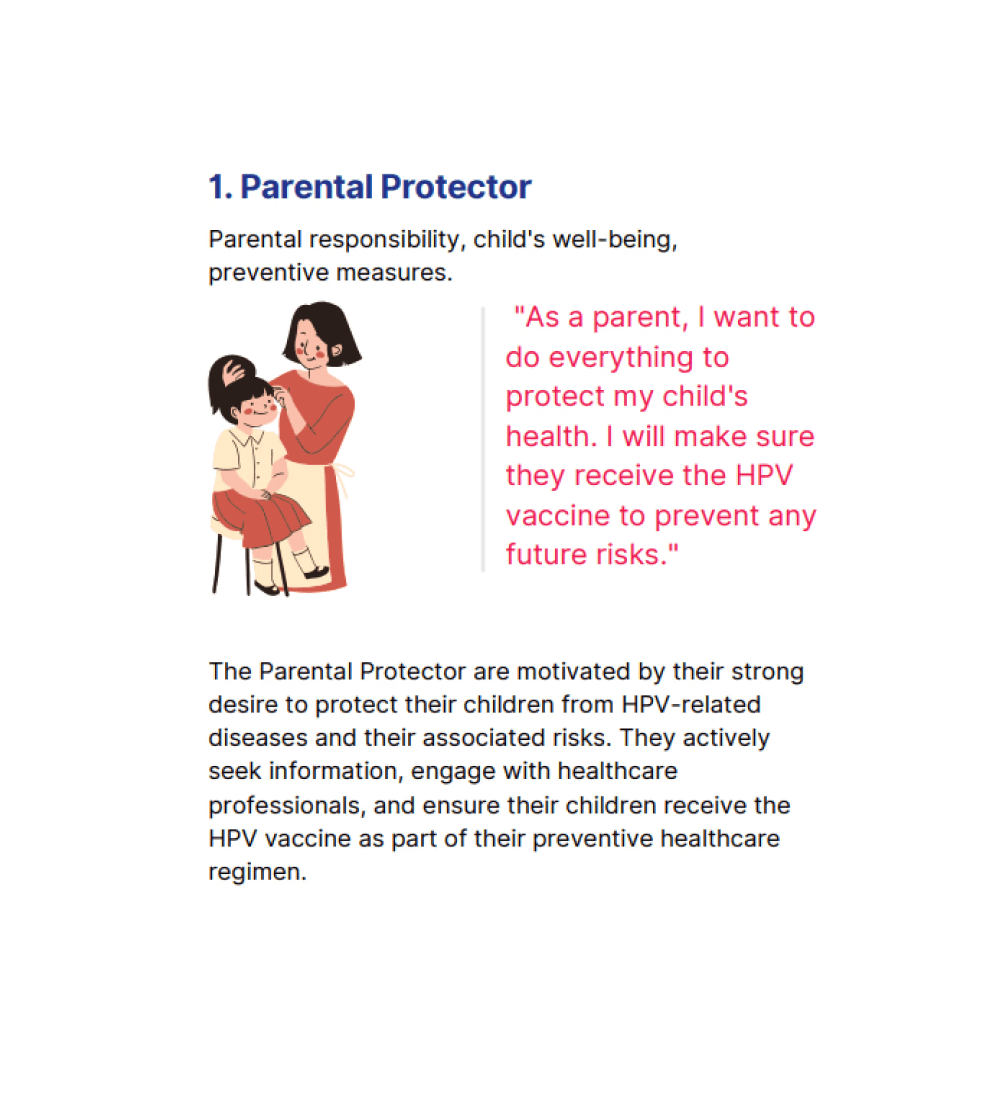
Built initial personas during journey-mapping workshops
Analyzed patterns into 8 behavioral archetypes
Structured archetypes around motivation, influence, and decision triggers
Designed for cross-country scalability across markets
Behavioral Modeling - Fogg Framework
Why wasn't awareness enough to drive action?
Analyzed the behavior gap between knowing about the vaccine and actually completing the cycle.
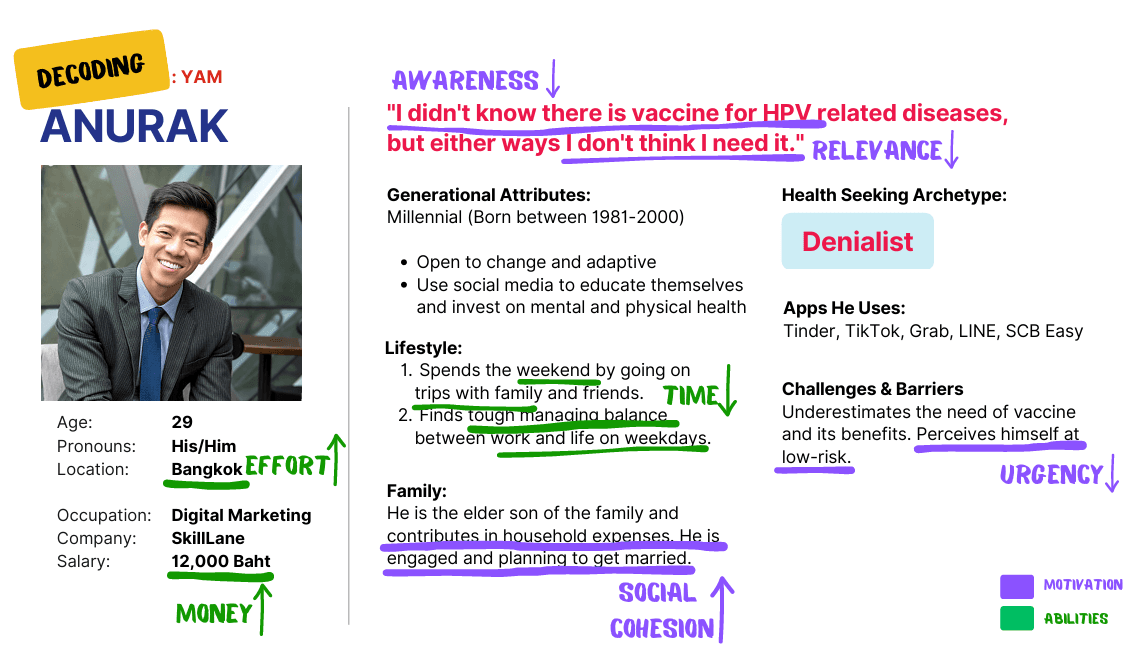
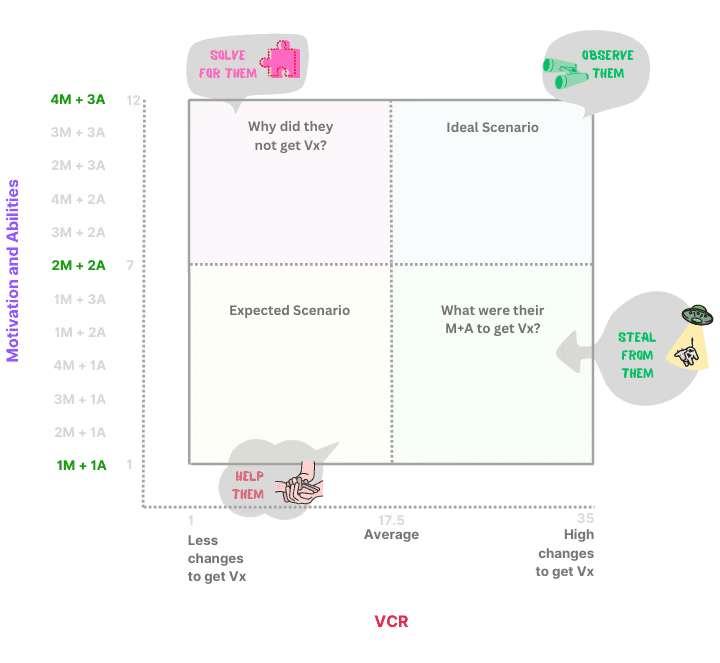
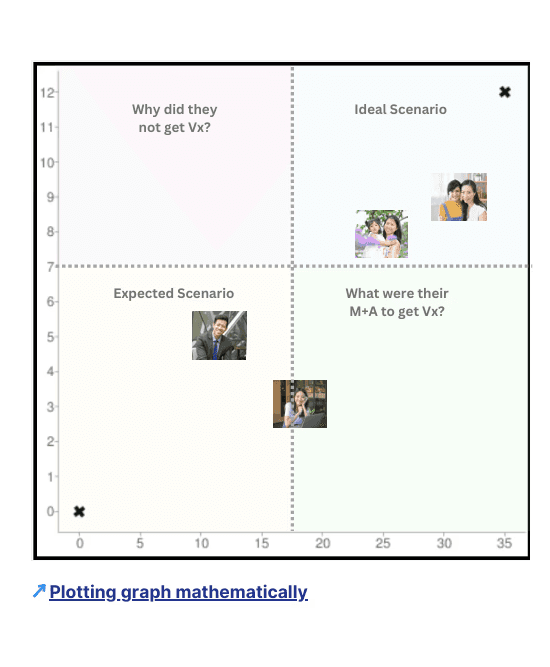
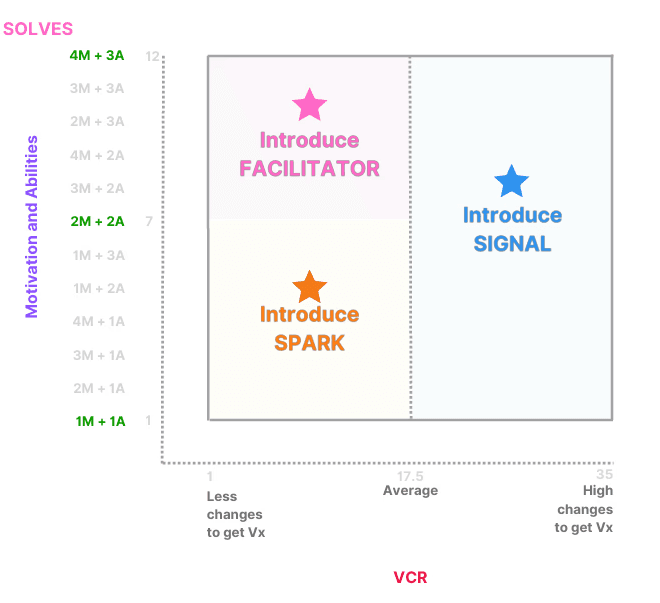
Applied the Fogg Behavior Model (Motivation × Ability × Prompt)
Partnered with a data scientist to model behavioral variables
Mapped drop-offs across the 6–8 month vaccine cycle
Identified high-impact moments for timely prompts and nudges
Insights
Vaccination Is Social,
Not Individual
Peer influence, identity, and cultural framing had greater impact on uptake than access alone.

Long, multi-phase schedule
HPV Vaacine requires a 2–3 dose series spread over 6+ months (0, ~2, and 6 months) to complete protection, leading to friction and missed follow-ups.

Cost barriers
Full series of vaccination costs ~$400–$560 USD (in Asia) in private settings. Out-of-pocket cost without strong public subsidization disincentivized adult male vaccination.

Lack of urgency
No strong cultural urgency or male-focused narratives existed, reinforcing low perceived benefit.

Discomfort in conversations
Doctors, parents, and adolescents avoided sexual health talk, suppressing recommendation uptake.
Proposed Solutions
Defined multiple interventions throughout the journey
Cross-industry inspiration to drive strategic directions
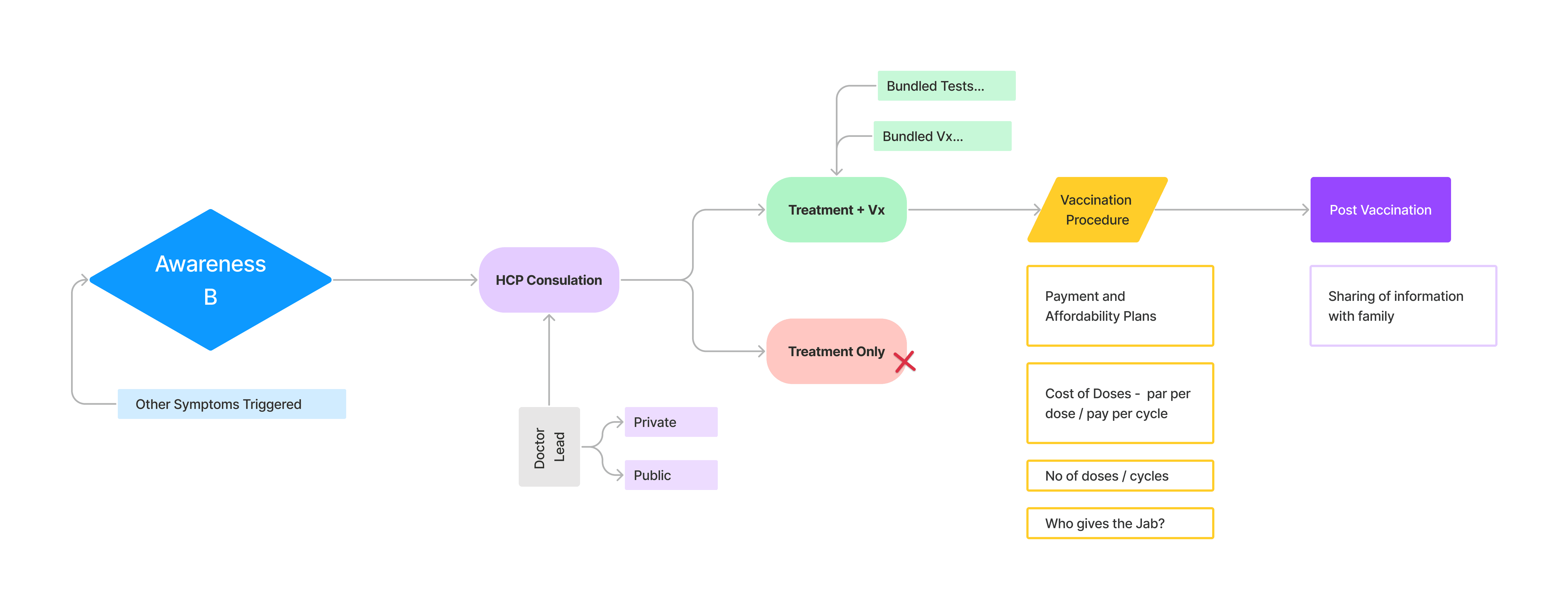
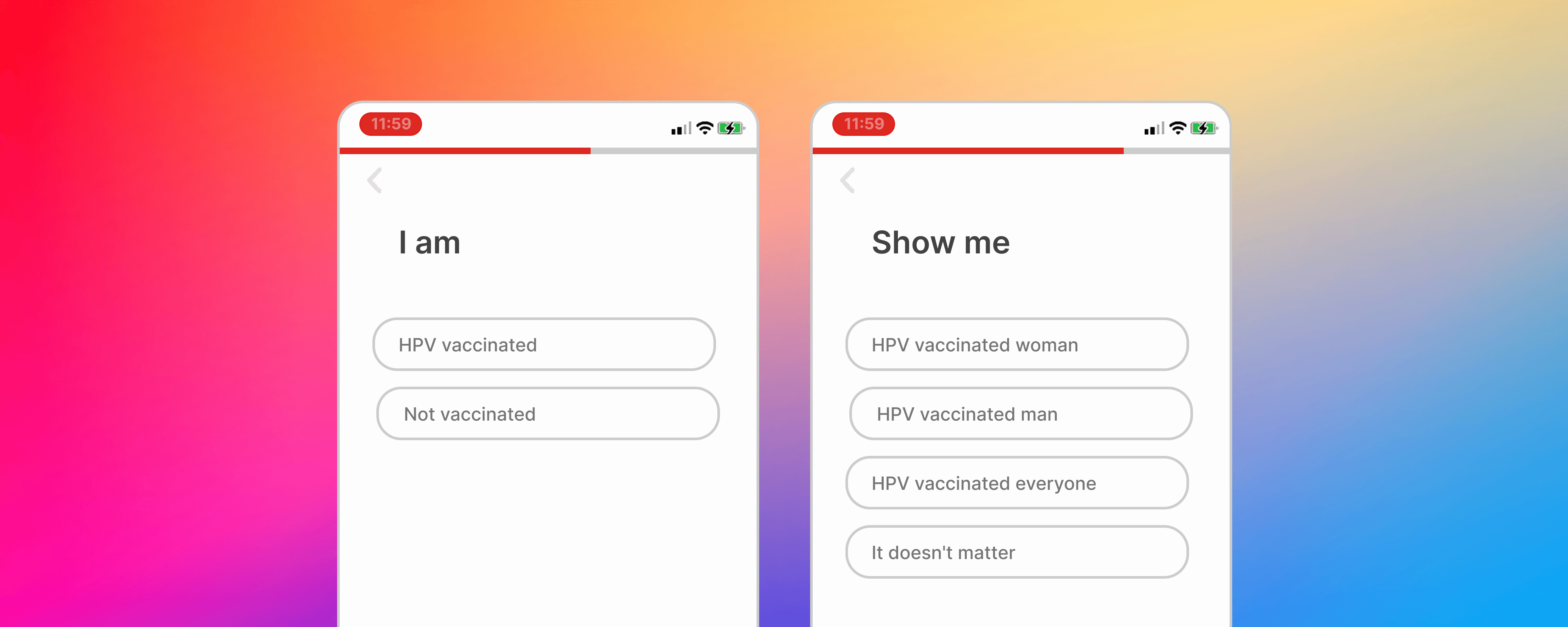
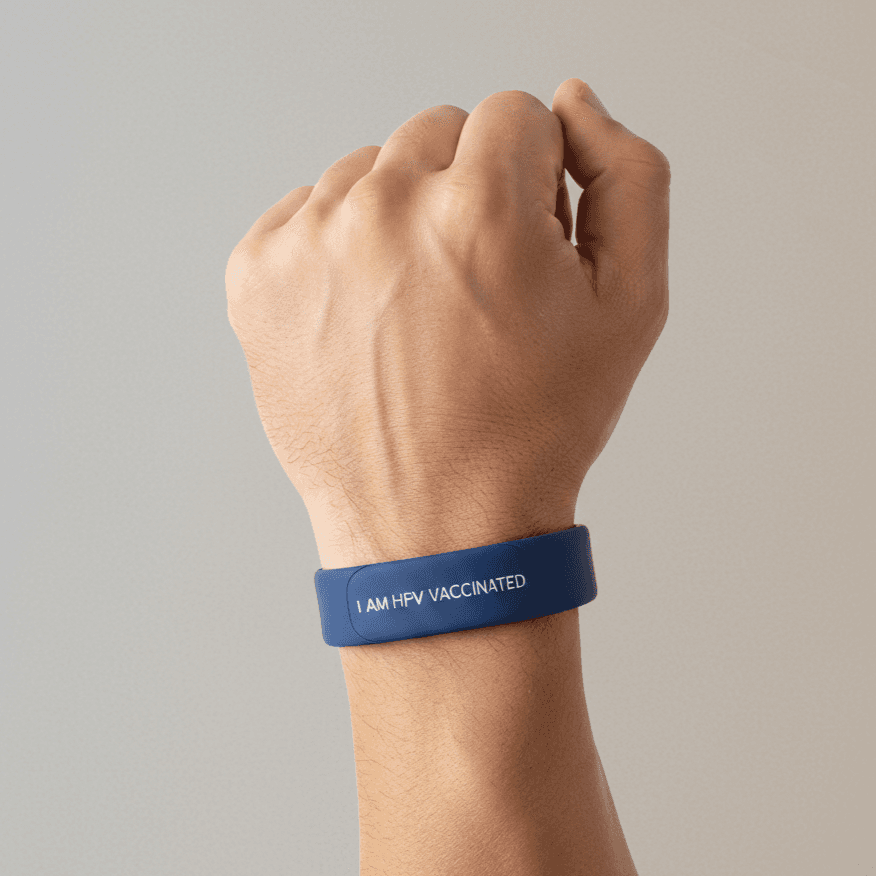

Bundle & Referral
Inspired by telecom pricing, we explored subsidized family plans and referral incentives to drive peer vaccination.
This reduces cost barriers and drive group uptake.

Normalize
Normalize HPV vaccination in men, similar to men’s skincare. Clearly differentiate HPV from HIV to reduce confusion. Shifting perception from “not for me” to preventive care.

Dating Platform Trigger
Position vaccination as part of responsible intimacy. Partner with leading condom brands. Target individuals with multiple partners. Meet users in existing sexual health contexts.

Tangible Artifacts
Introduce branded HPV wristbands or wraps. Use social signaling to build urgency. Create visible, shareable cues that brings vaccination into public norm.
Deliverables
Replicable framework
Started with Hong Kong market and scaled the model cross 6 other Southeast Asia markets.
Insights from the Project
Scalable Internal Toolkits
Local Startup Partnerships
Formation of an IDEA Studio
Identified systemic gaps and analyzed findings into detailed reports.
Created reusable co-design toolkits for replication across other drug type and markets.
Mapped relevant health startups and aligned them with engagement gaps.
Contributed strategic direction towards the launch of the Innovation Studio.
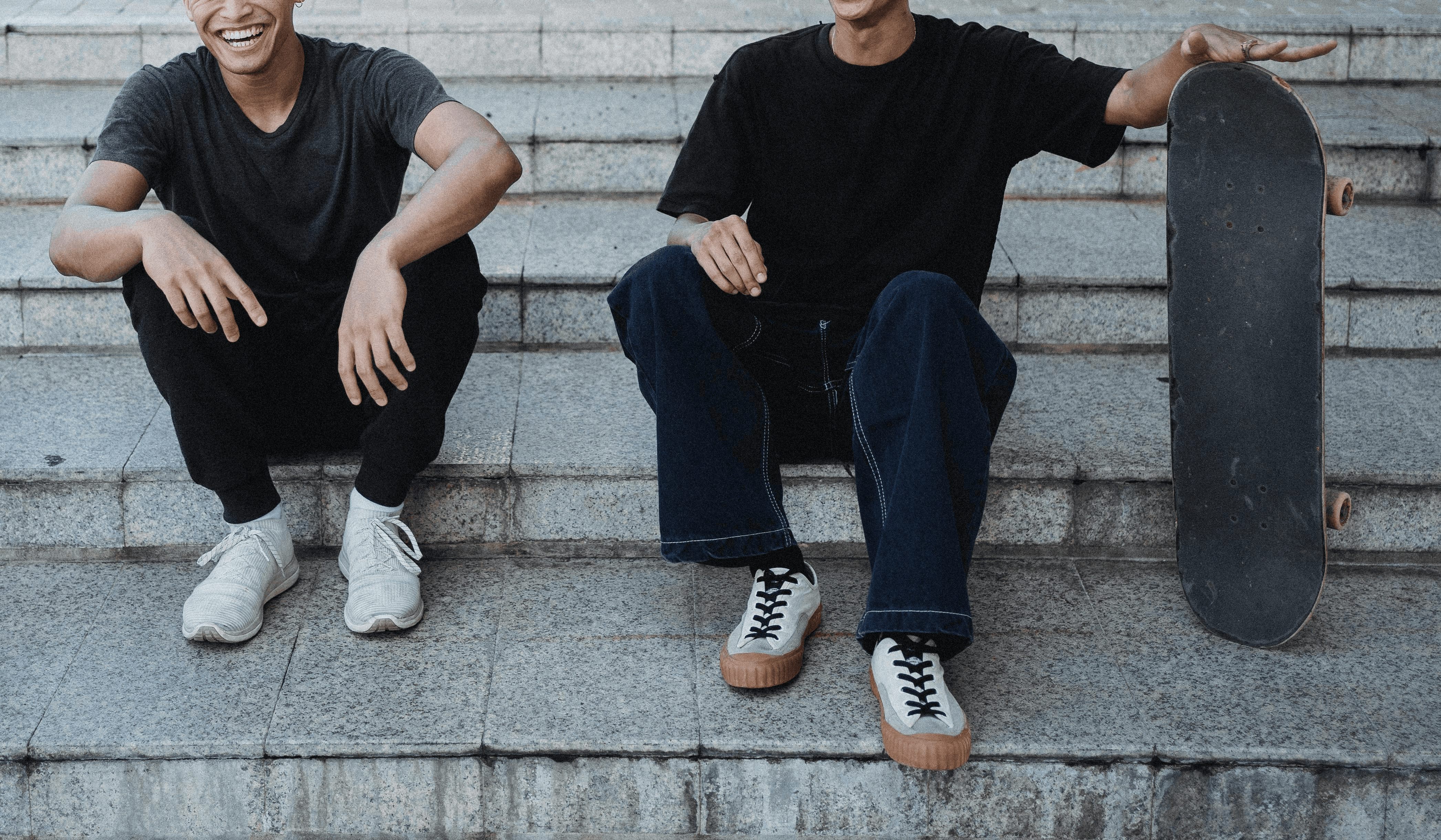
HPV affects men too.
Learnings and Giveaways
Designing with non-designers
A key outcome was the development of a replicable template that could be adopted in multiple markets
Major Constraint
We had 40+ stakeholders.
Doctors. Marketing leads. Sales teams. Medical directors.
All brilliant.
None of them knew Figma
I could have
Asked 12 people per session to create Figma accounts
Spent 30 minutes teaching navigation
Watched the energy drop
Instead
I used Excel.
Every stakeholder used Excel daily.
It was familiar. It was frictionless. It was accessible across countries.
So I designed journey maps, RACI frameworks, and persona templates directly in Excel.
Workshopping
For onsite workshops, we printed A1 rolls of these Excel sheets and pinned them across walls.
For remote sessions, we screen-shared and collaborated live.
Insights > Pretty visualization
After workshops, my team and I translated everything into structured Figma maps ourselves.
Across 6 countries and 2 therapy groups, we documented 1,000+ pain points — patterns that later shaped strategic decisions and innovation direction.