Reducing fear of injection through play and storytelling
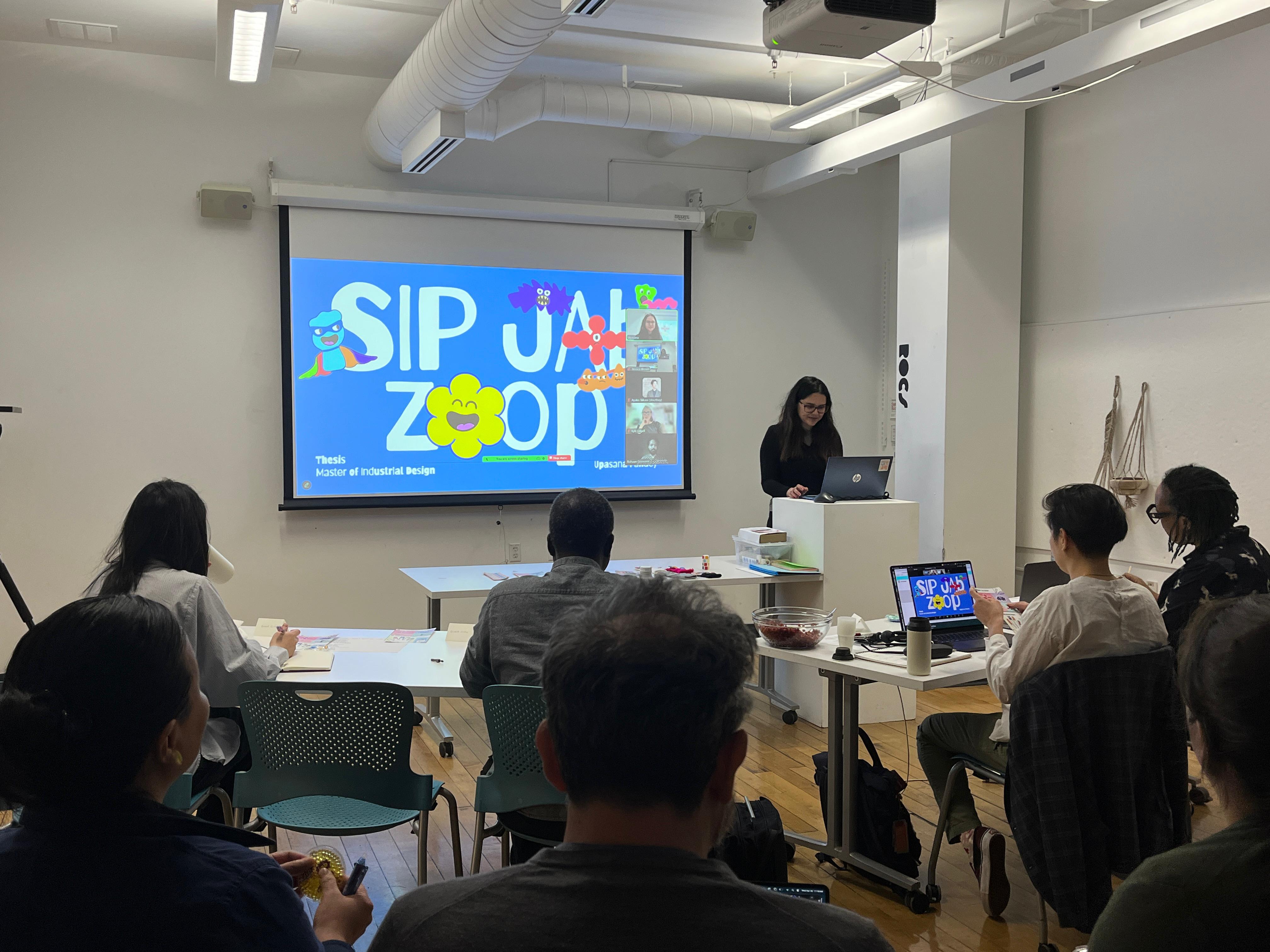
/This was my Master of Industrial Design Thesis
Role
End-to-end designer
Duration
1 year
Method
Research, Design, Making, Testing, Execution
Stakeholders
Children, Parents, Clinicians, Nurse, Vaccine companies
Thesis Committee
Rhode Island School of Design (RISD),
Brown University, Stanford Healthcare
Mentors
Else Play, Providence Community Health Centers, Dr. Pat Feinstein Child Development Center, RI Blood Center
Awards and Press




Speaker at IDEO Play Lab

Speaker at AATH Humor in Health Conference
Problem
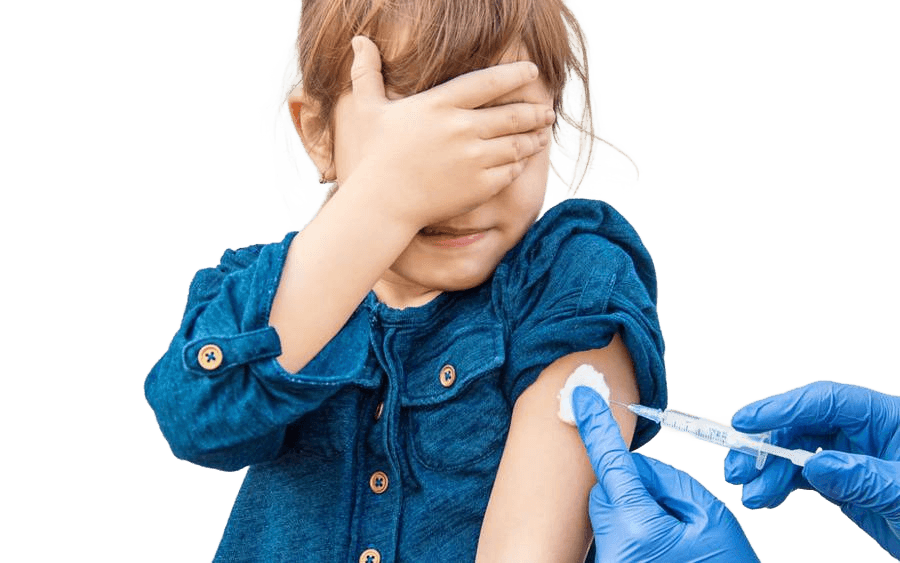
80% of children fear needles
The needle barely hurts for 3 seconds.
What truly heightens distress is the anticipation before the shot and the lingering discomfort afterward.
Current solutions rely on TVs
Passive distractions like cartoons or videos can momentarily divert attention, but don’t give children a sense of agency or control.
Longterm effects
Unaddressed needle fear in childhood can lead to lifelong medical anxiety, vaccine hesitancy, and avoidance of preventive care.
Research
Mixed method research
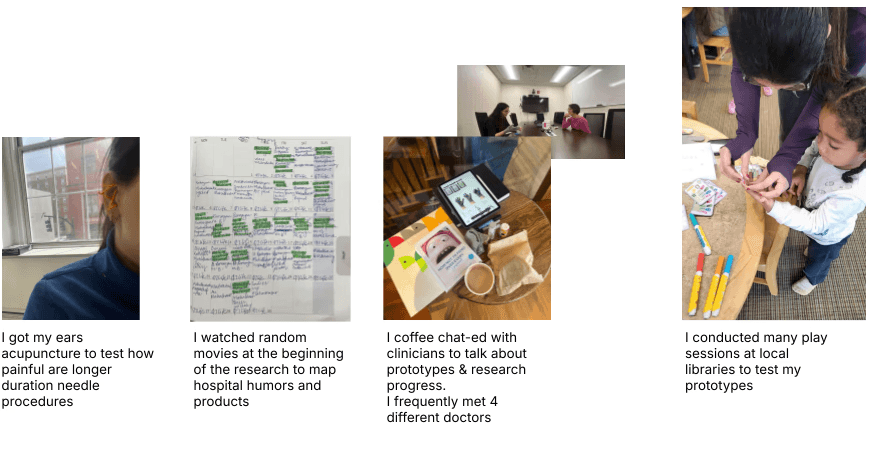
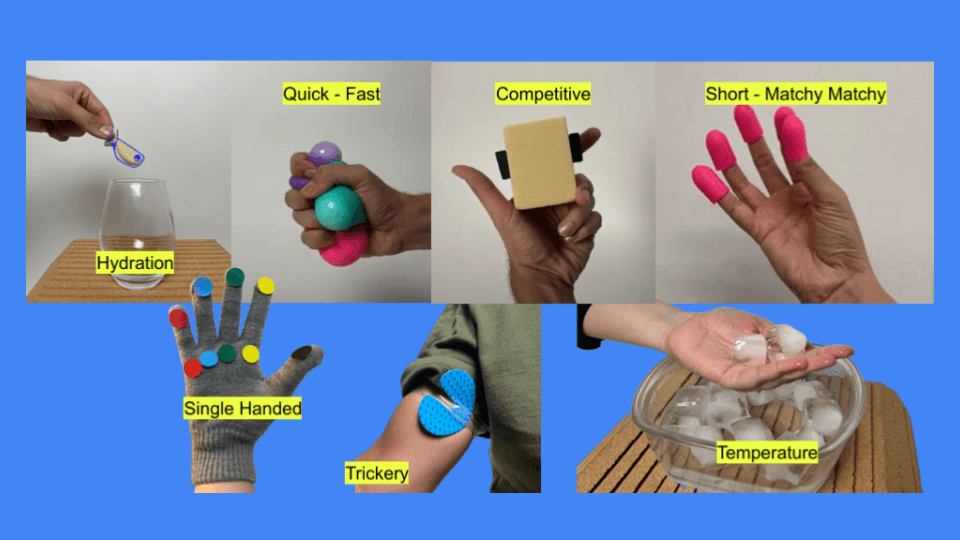
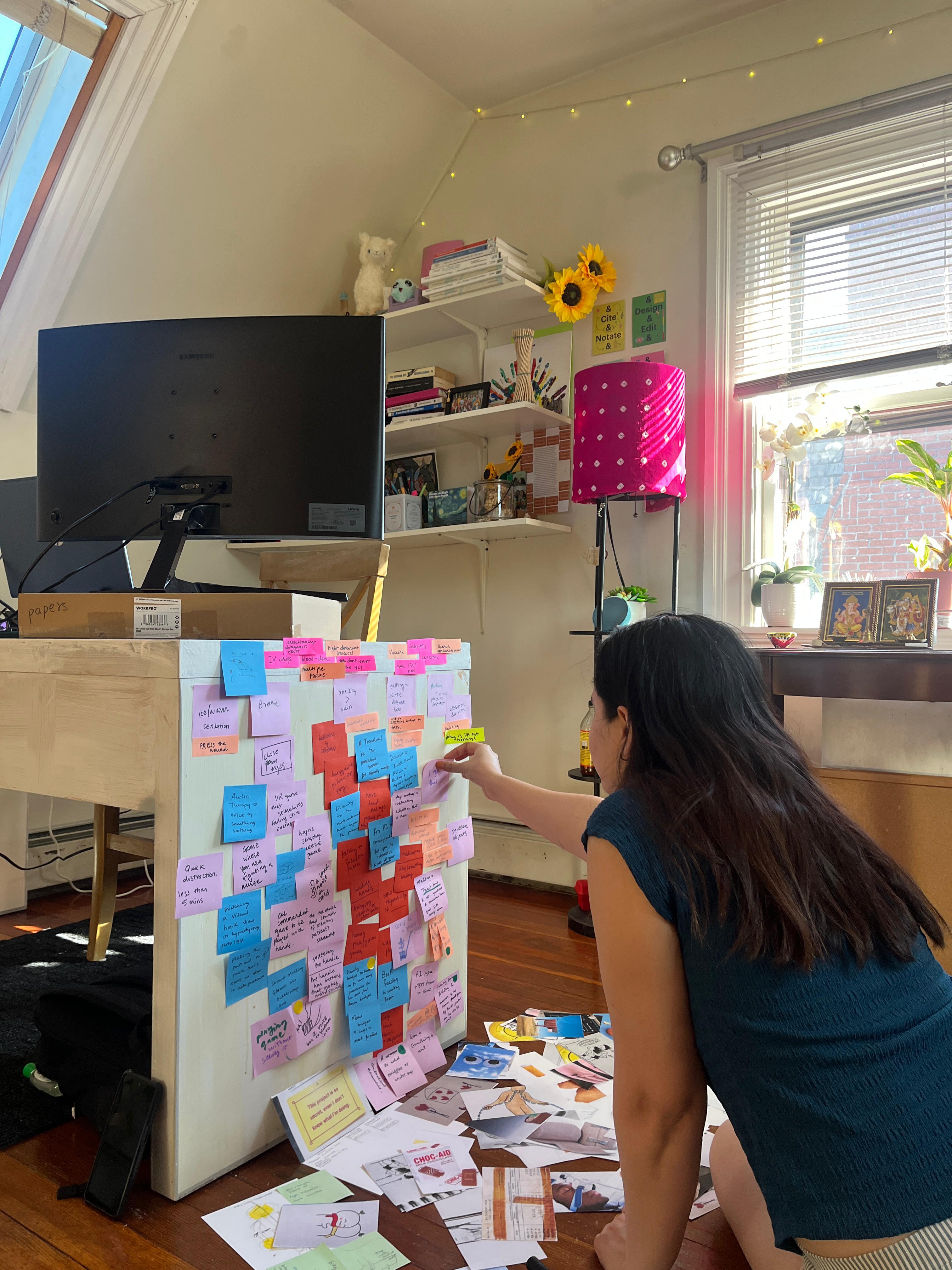
Conducted on-ground field research through clinician interviews and playtesting with children.
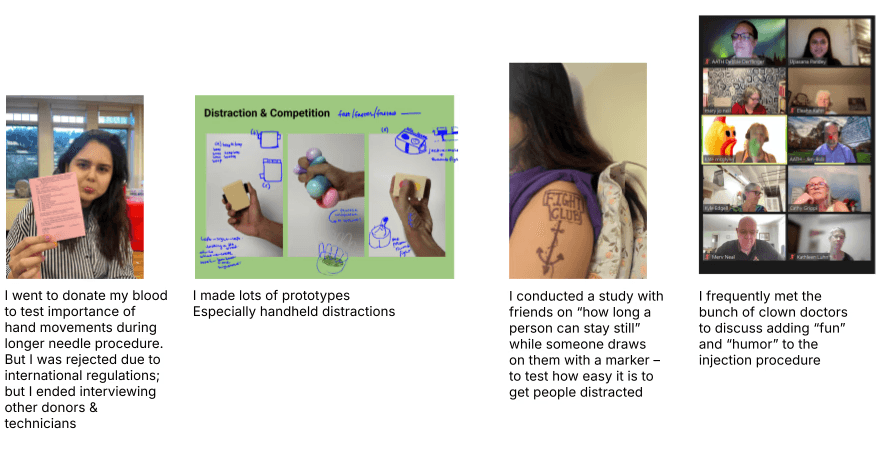
Observed Behaviors
Prototyped multi-sensory interventions that actively engage children during needle procedures.
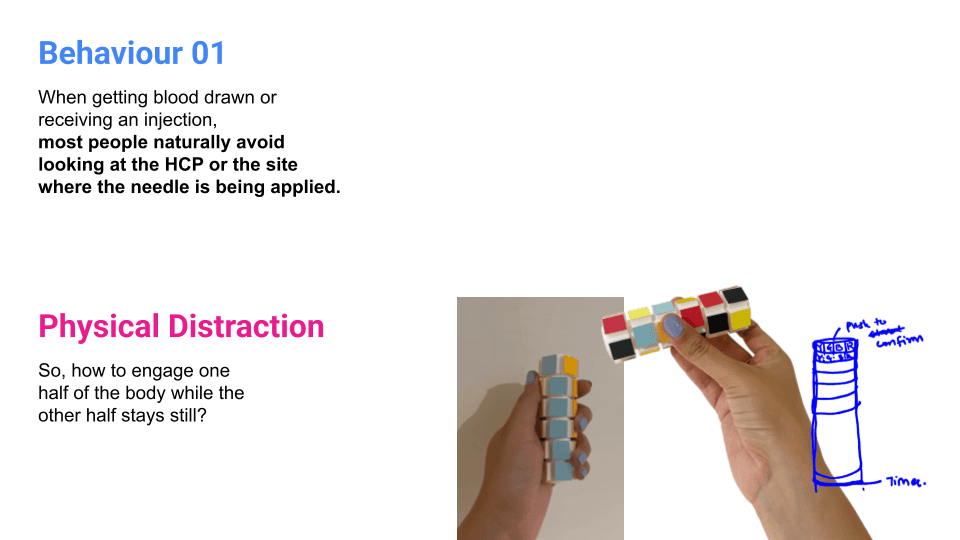
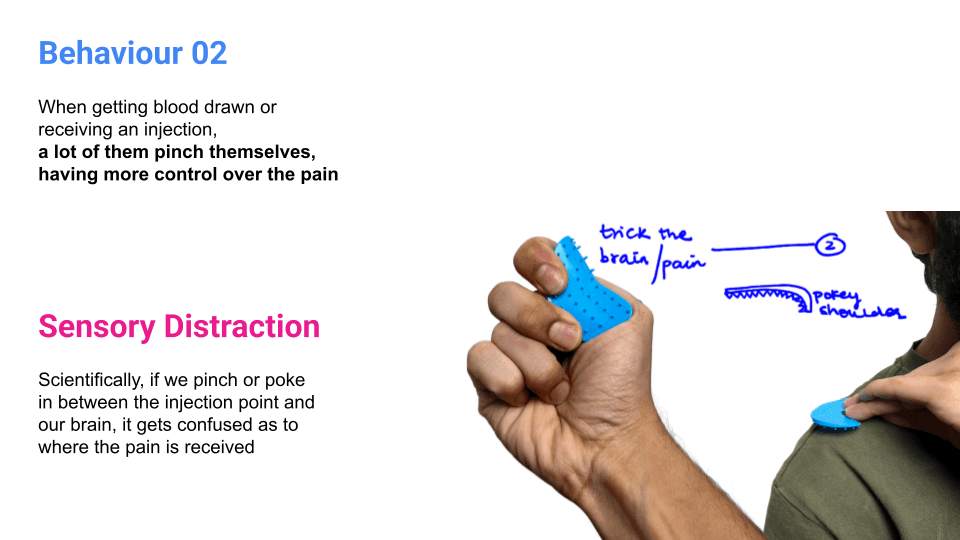
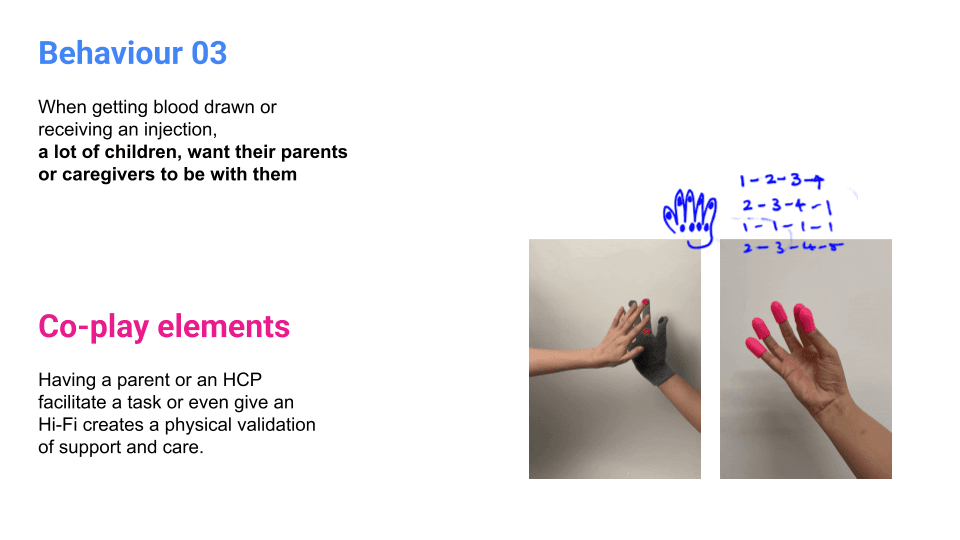
Insights
Reducing fear by shifting focus from pain to experience.
Giving children small moments of control during the process.

Children Need Agency, Not Distraction
Passive screens don’t reduce fear. Participation, control, and active engagement significantly lower anticipatory anxiety.

Play & Human Connection Regulate Stress
Humor, co-play, and caregiver involvement reduce tension more effectively than media-based distraction.
Clinical Environments Amplify Fear
Unfamiliar sounds, visuals, and language heighten anxiety before the needle even appears.

Tactile Engagement Reduces Perceived Pain
Handheld, sensory-based tasks that require focus and motor coordination ground attention and lower discomfort perception.
Solution
Creating a non-clincal,
low-cost intervention
These 5 core design principles ensured the intervention stayed simple, child-centered, and easy to integrate into real clinical settings.
Active distraction
Play as emotional regulation
Dual-user design
Low-cost, scalable materials
Seamless fit into clinical workflows
Proposed Solutions
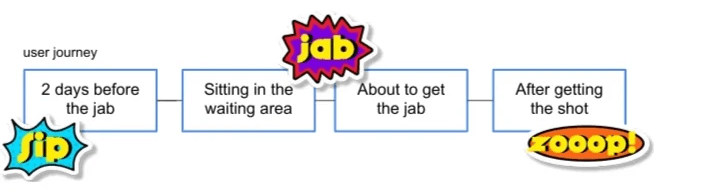
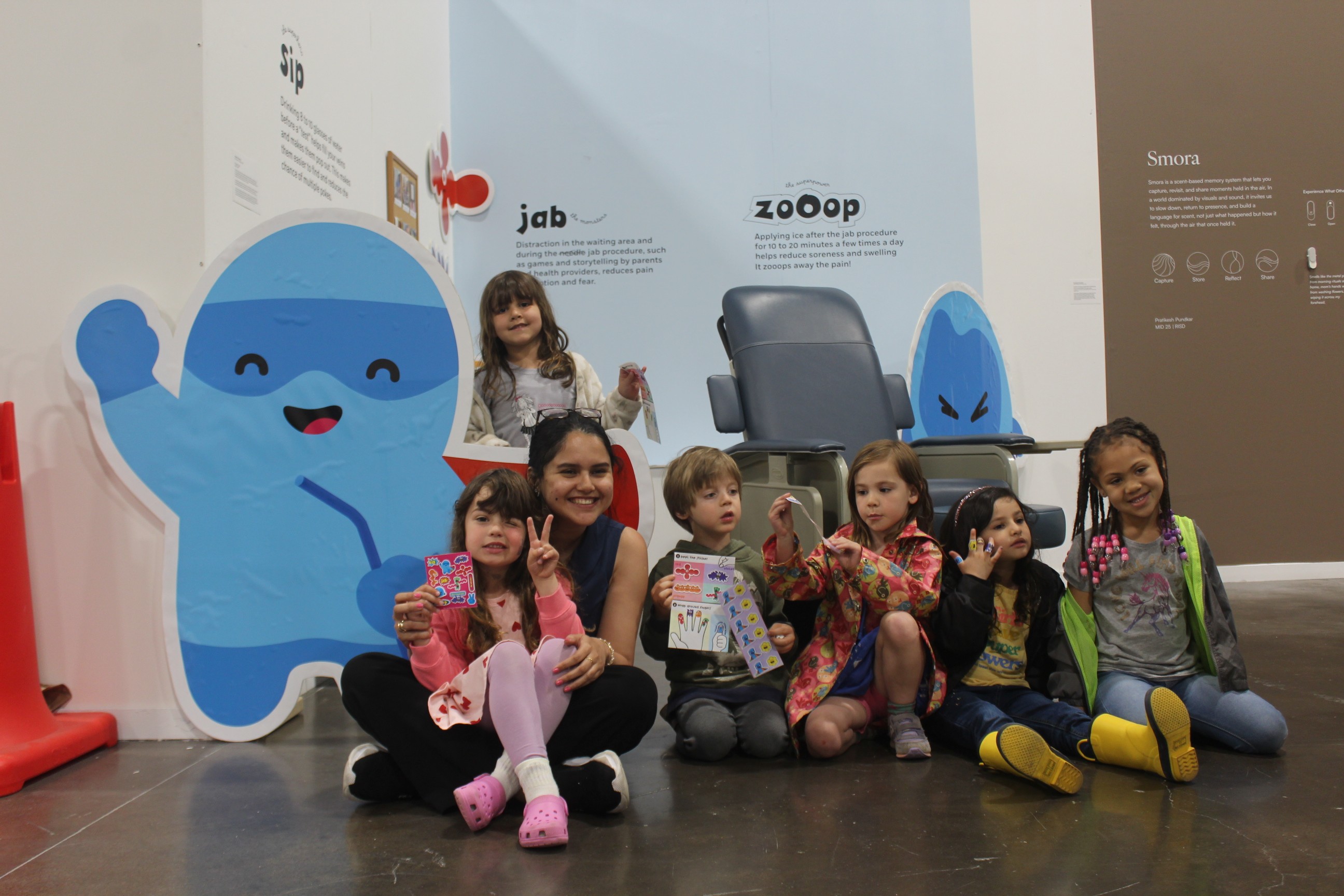
3-step system used before, during, and after the jab
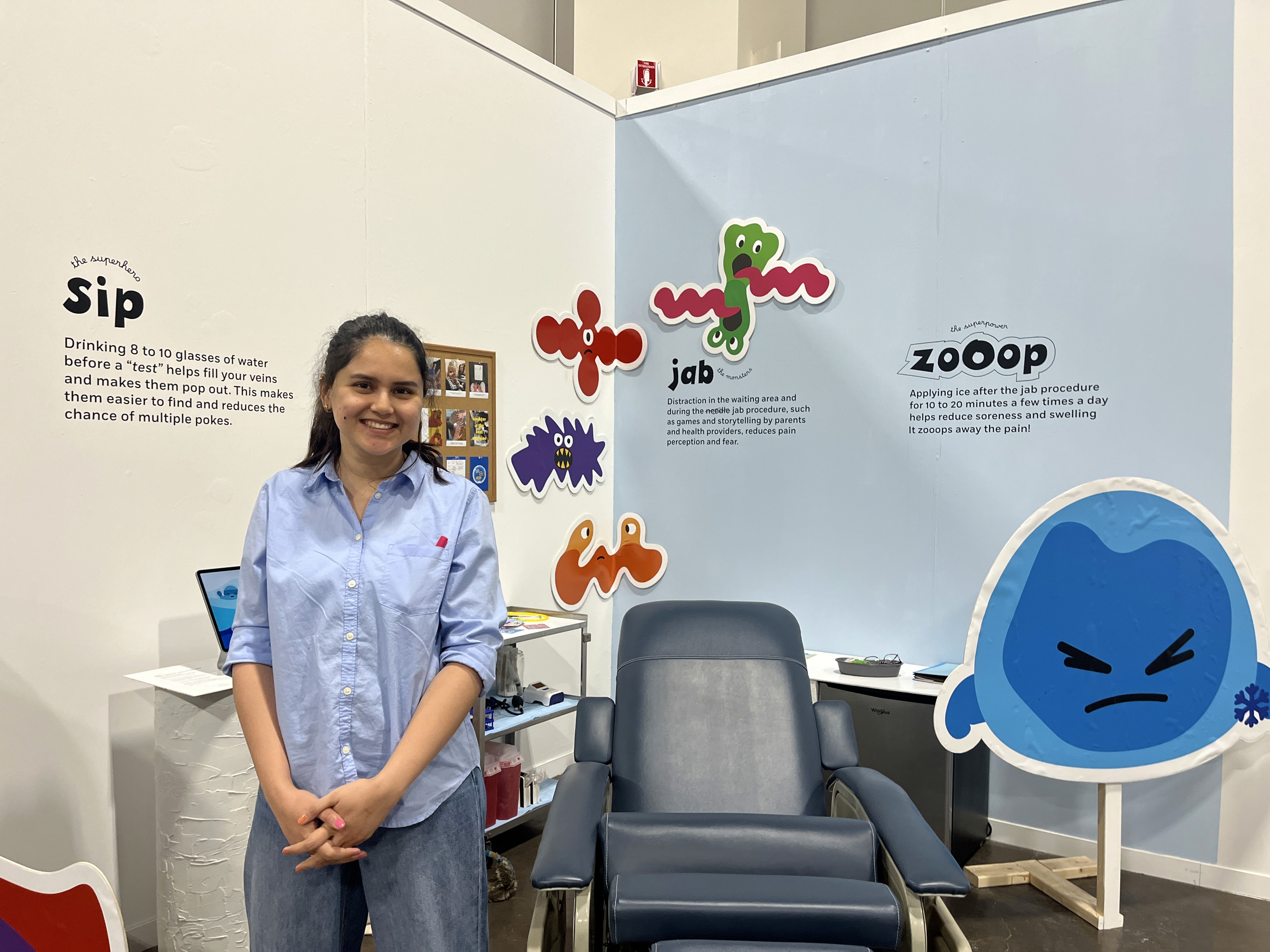
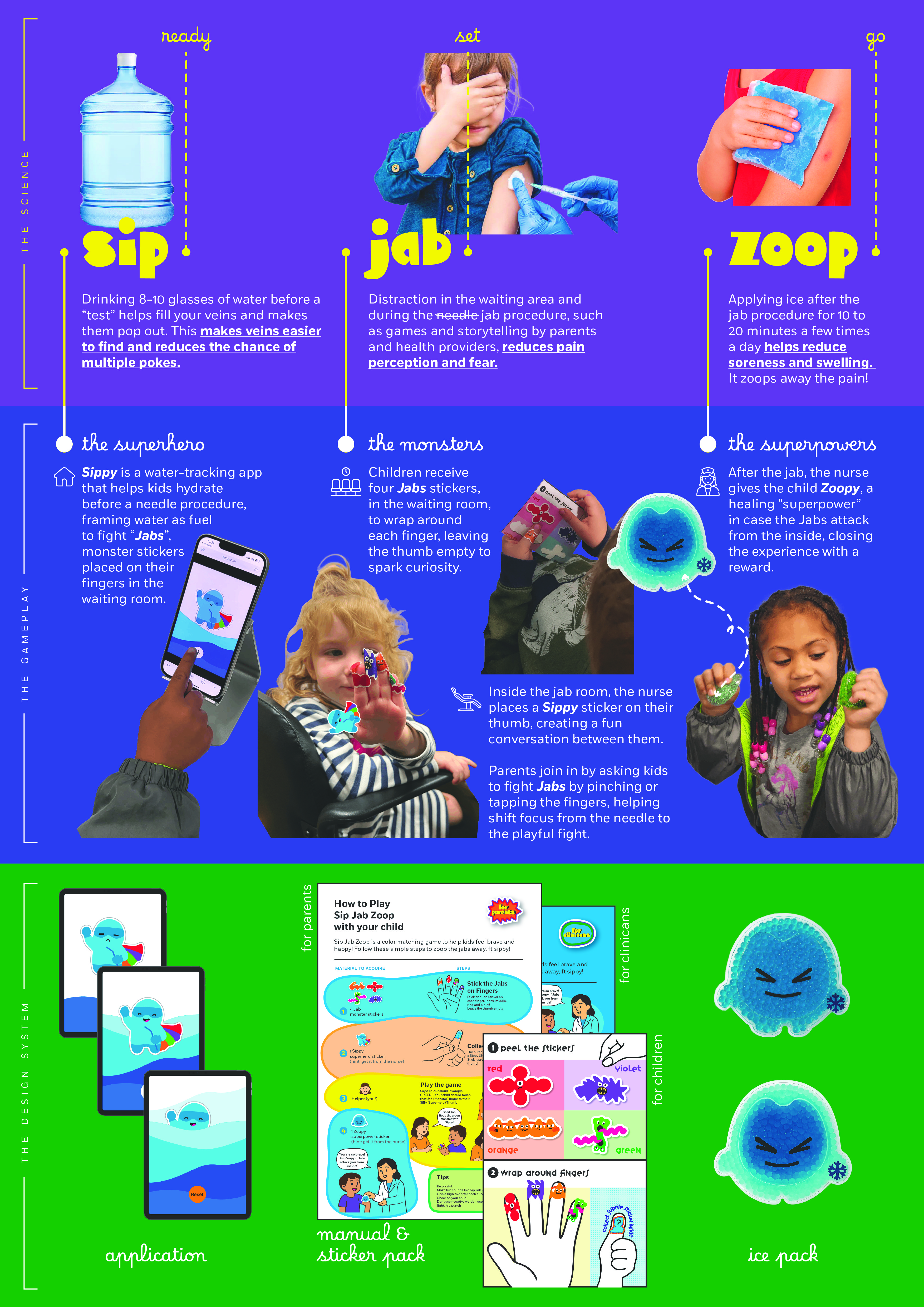
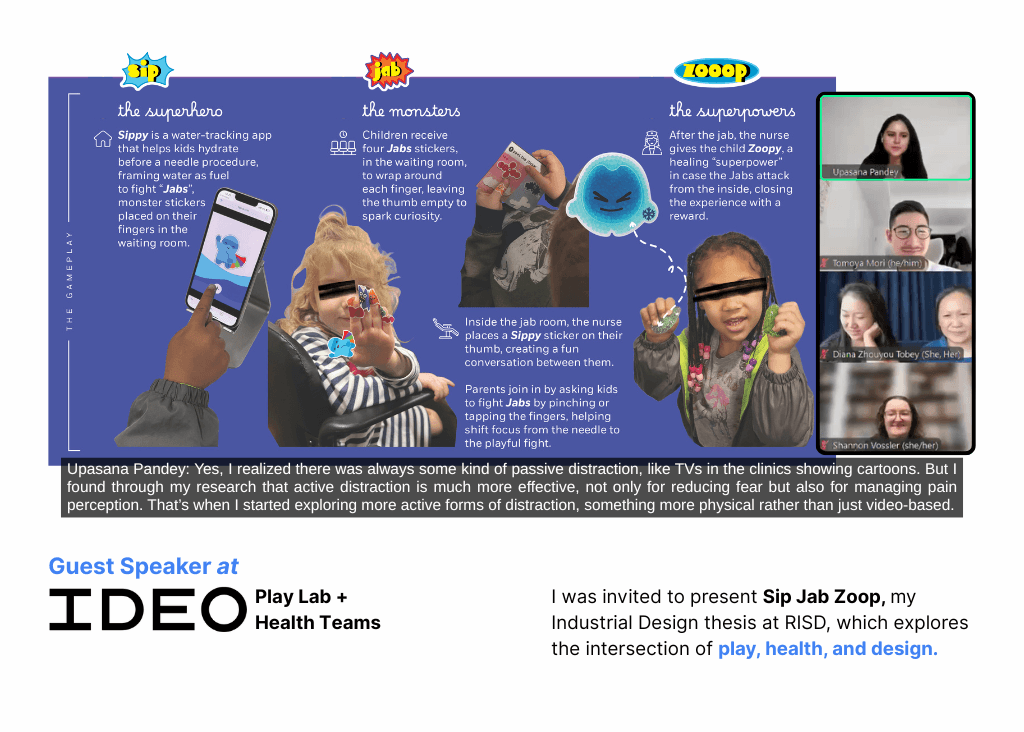
Sip Jab Zoop breaks the vaccination experience into steps that children can follow and participate in, helping shift attention away from fear and toward play.




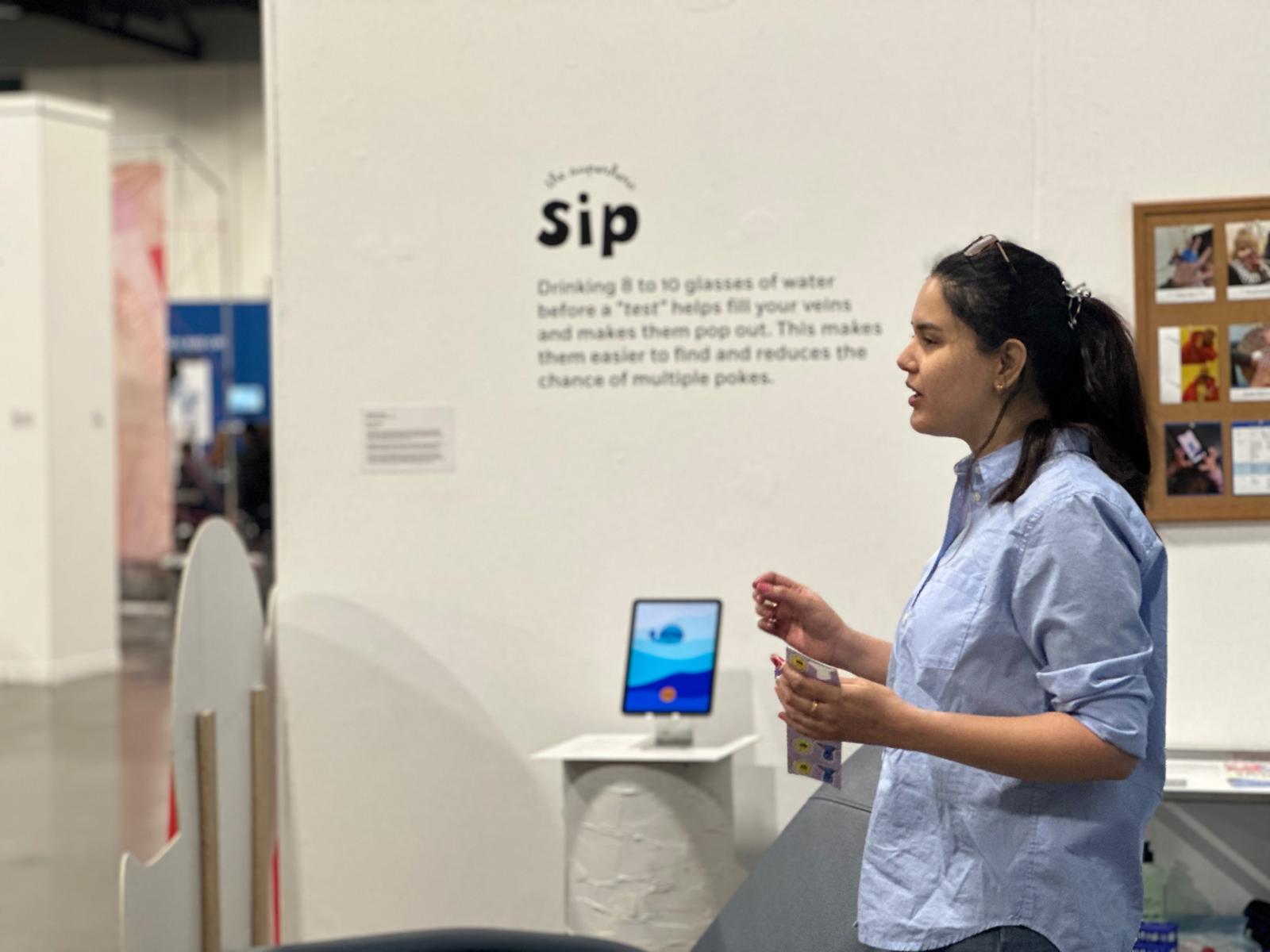
Sip — Ready
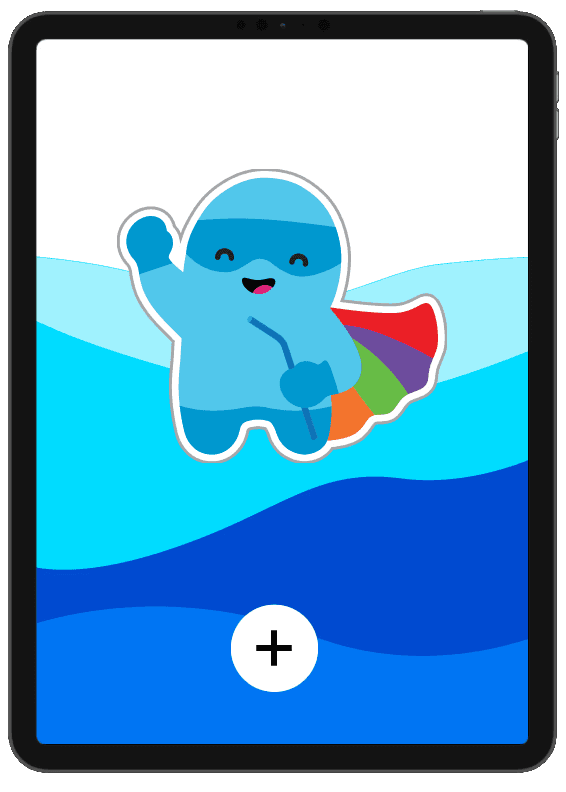
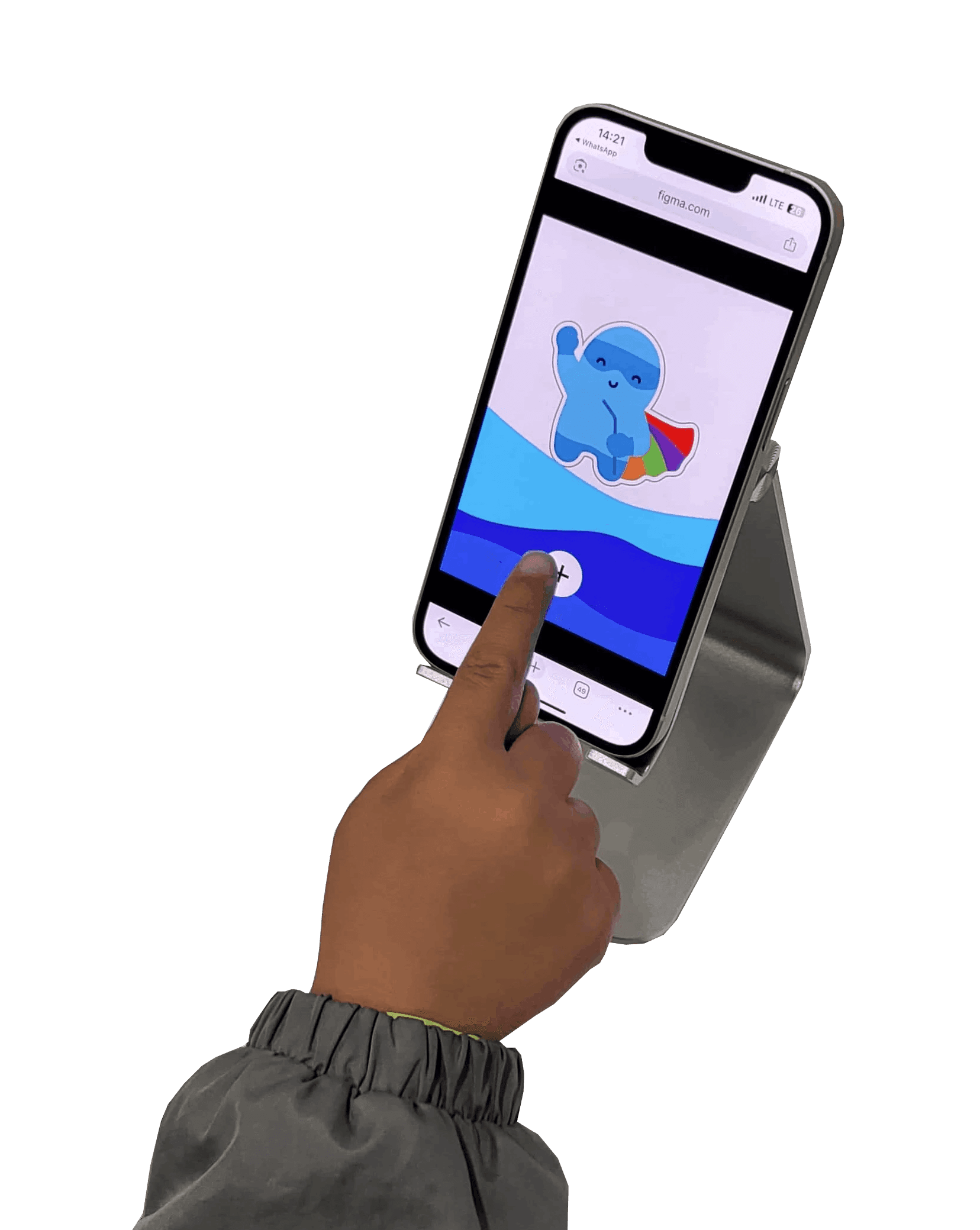
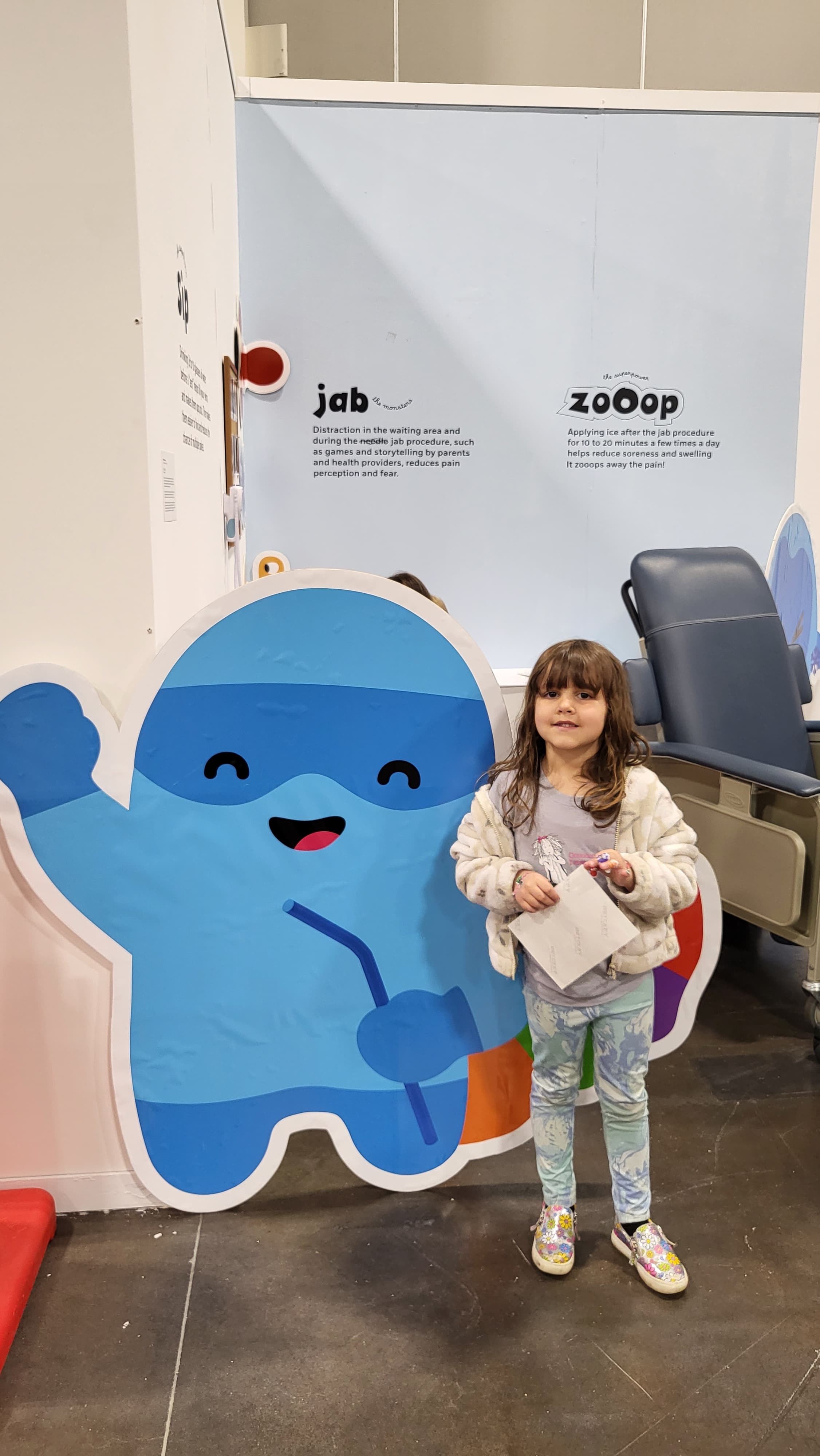
Before the visit, children hydrate with Sippy, a playful water-tracking app. When Sippy is full, it “powers up” for the Jab. Hydration also improves vein access, lowering chances of repeat pokes.
Jab — Set
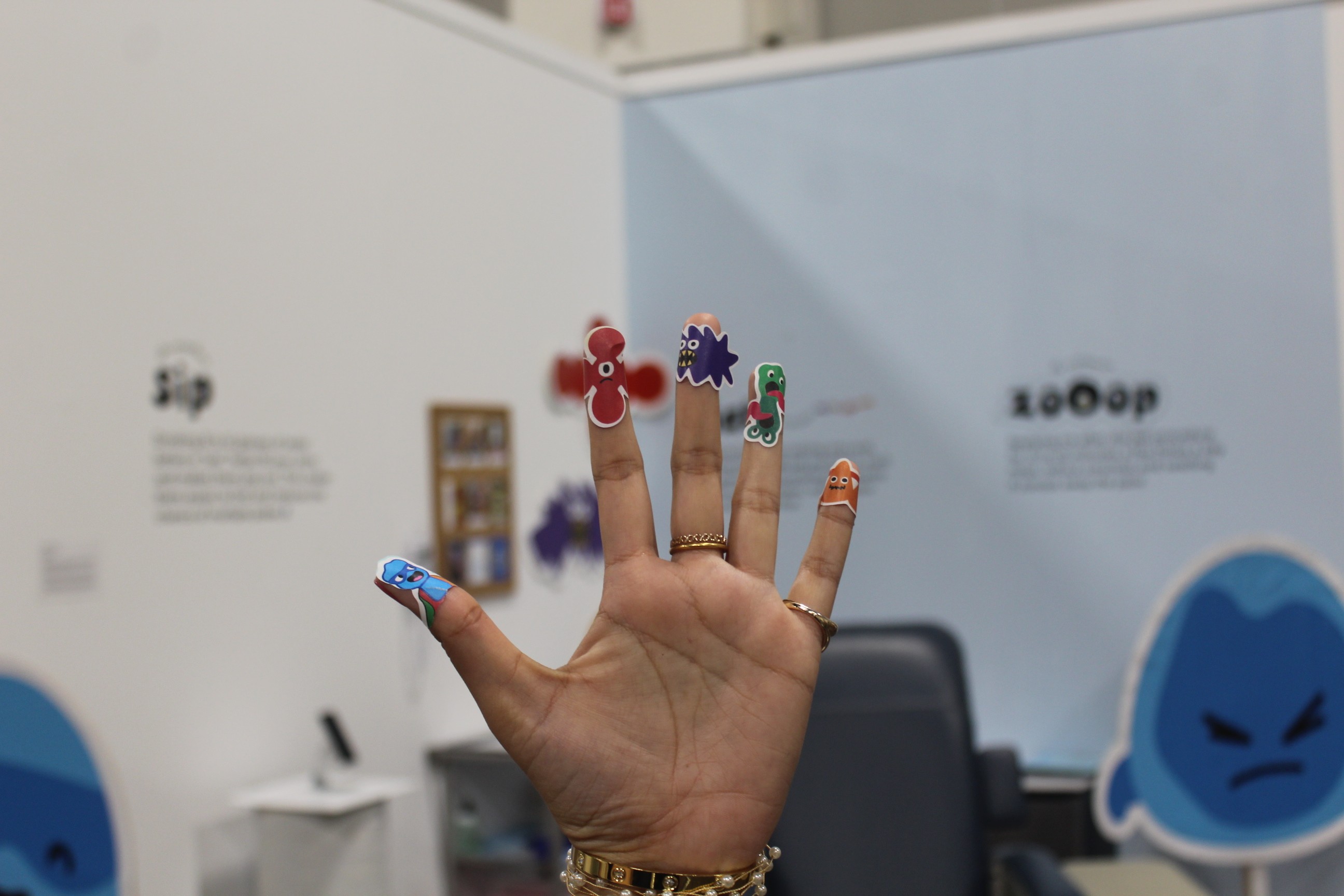
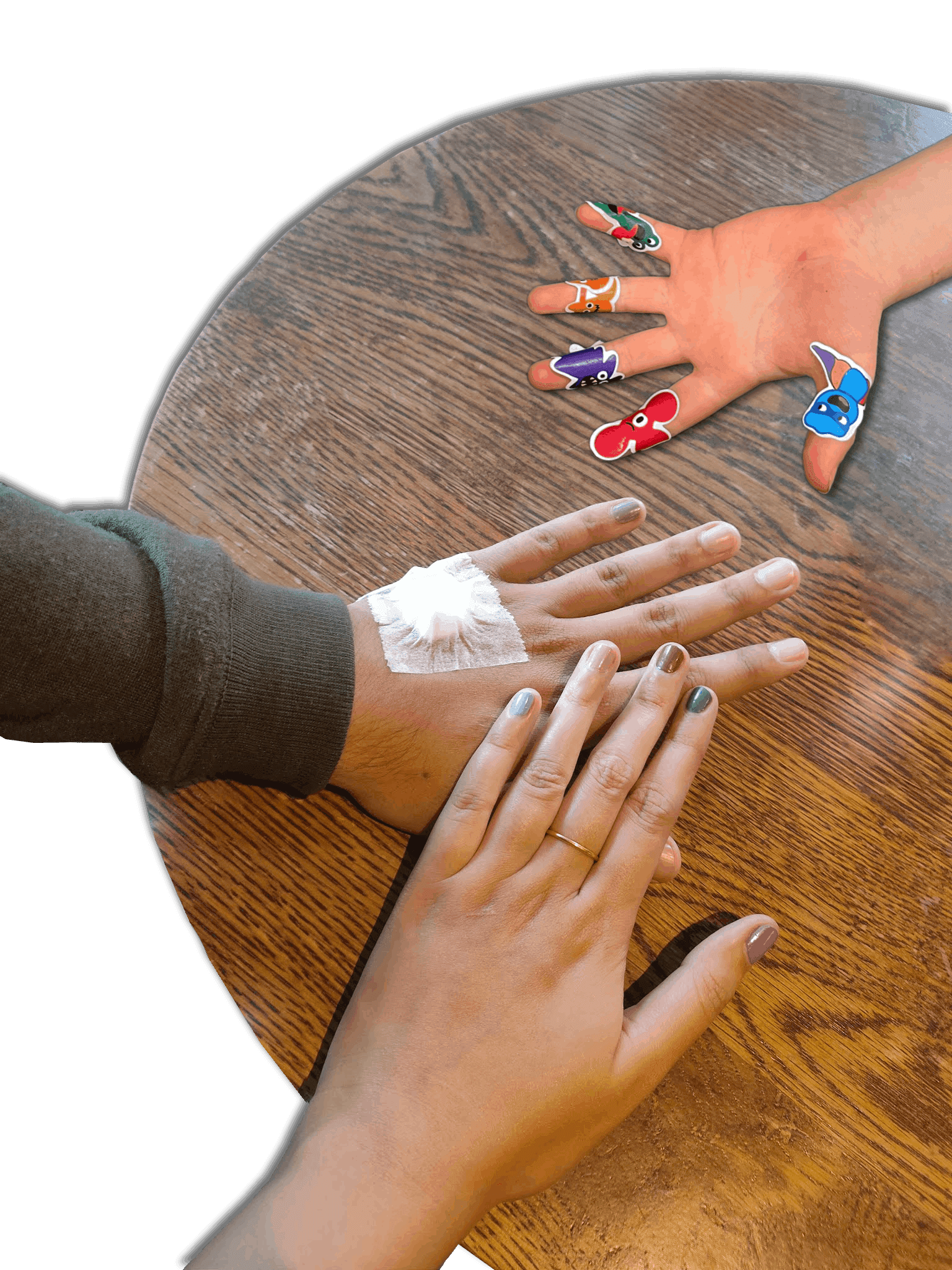
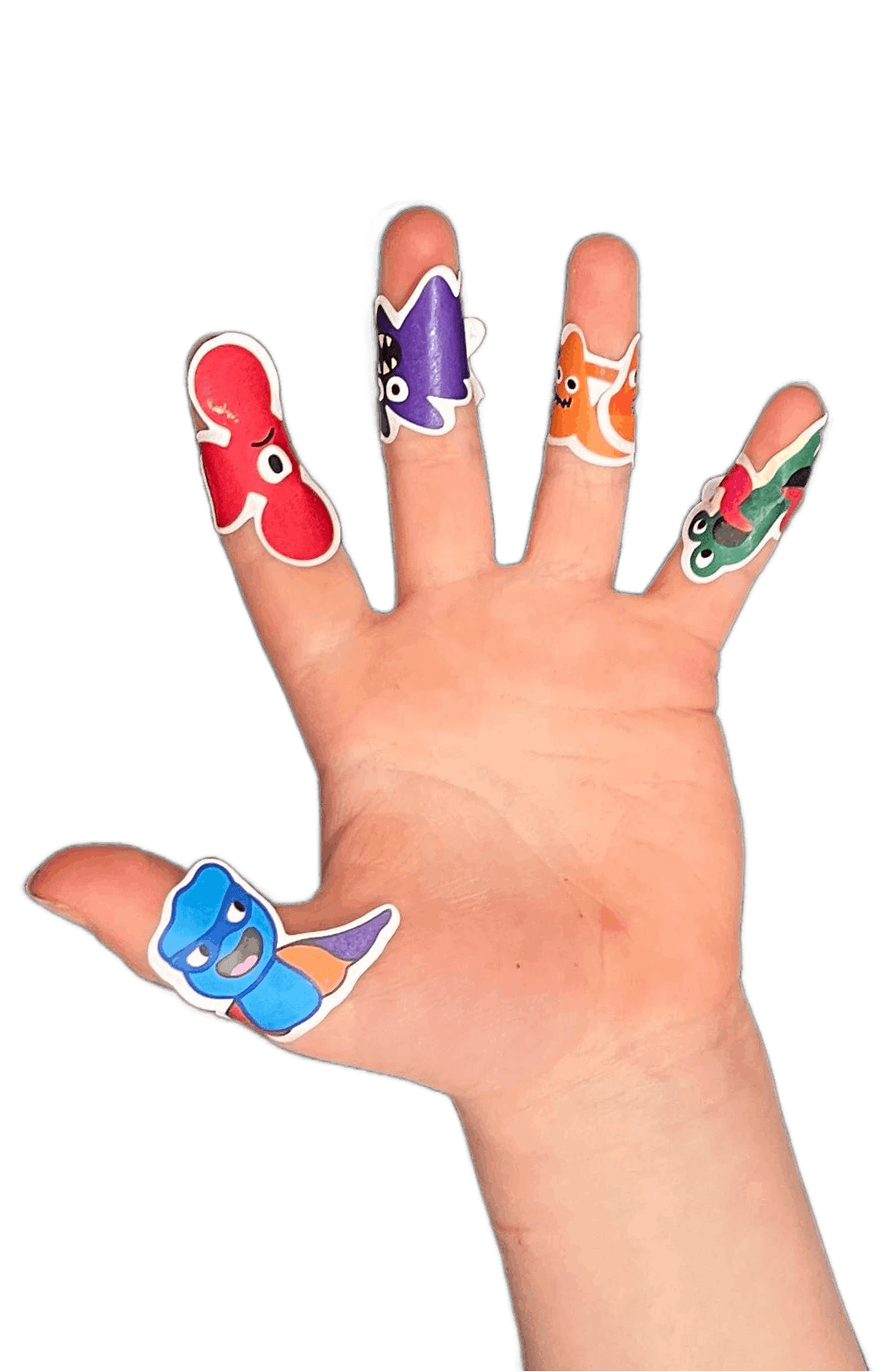
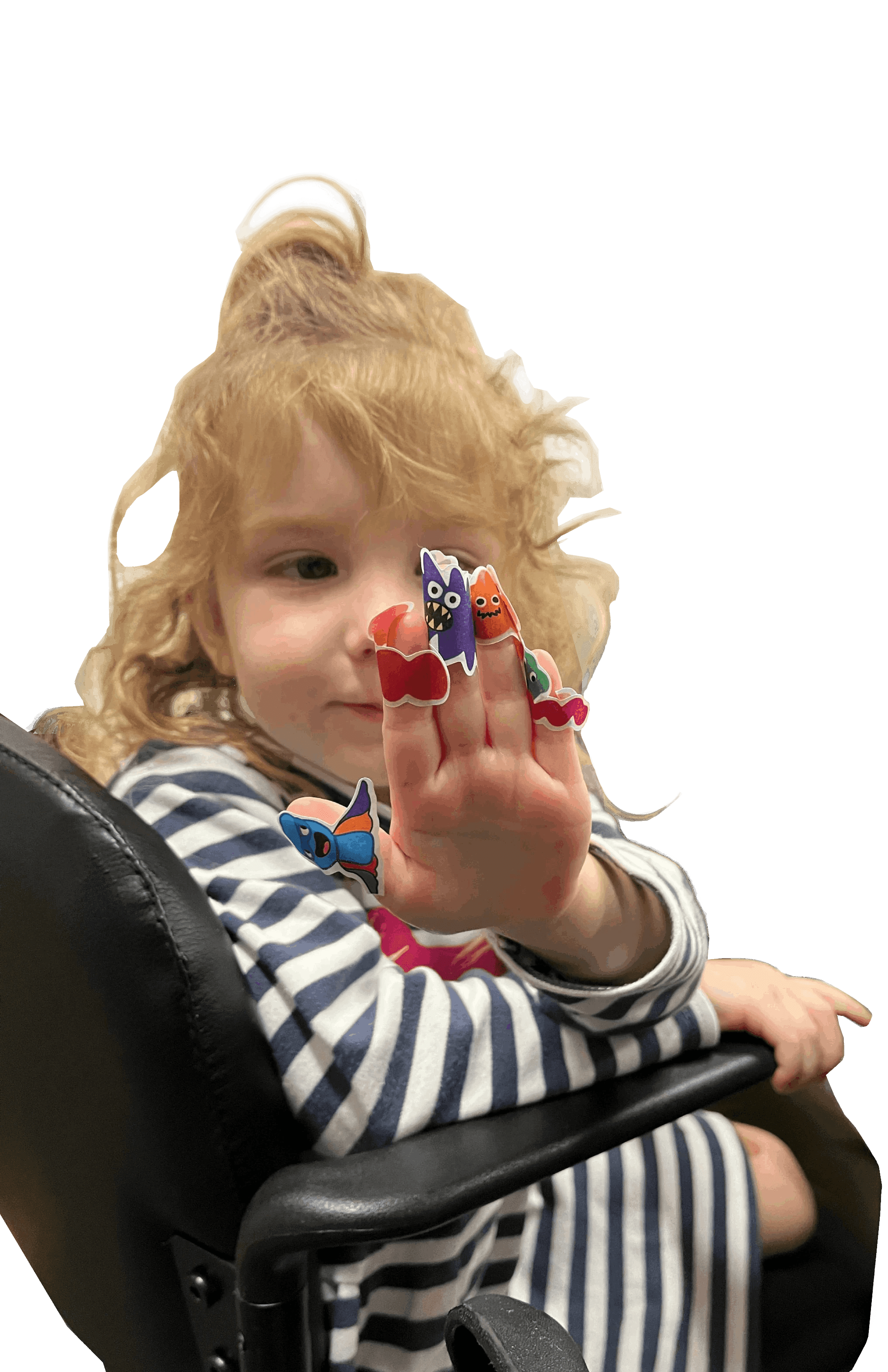
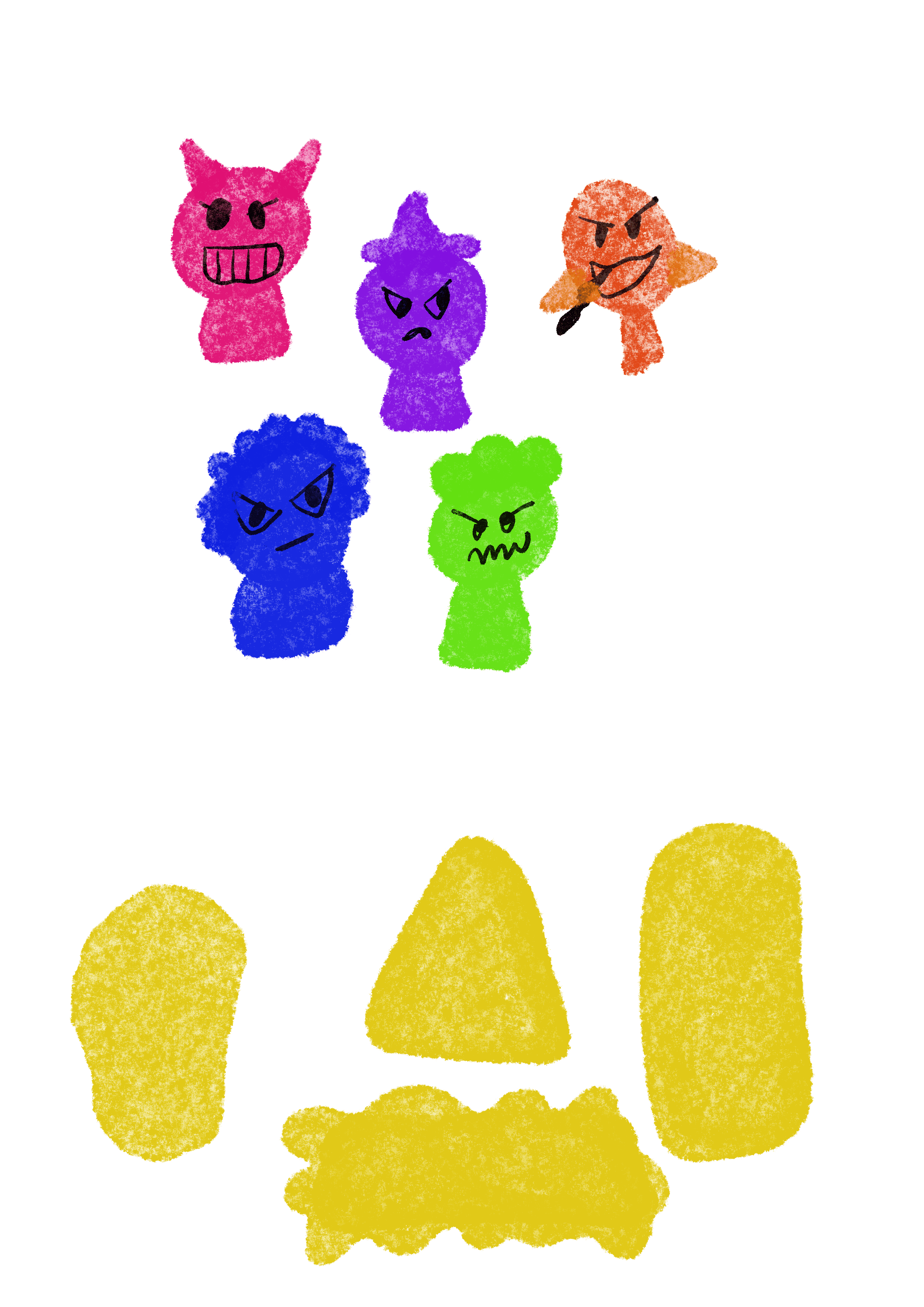
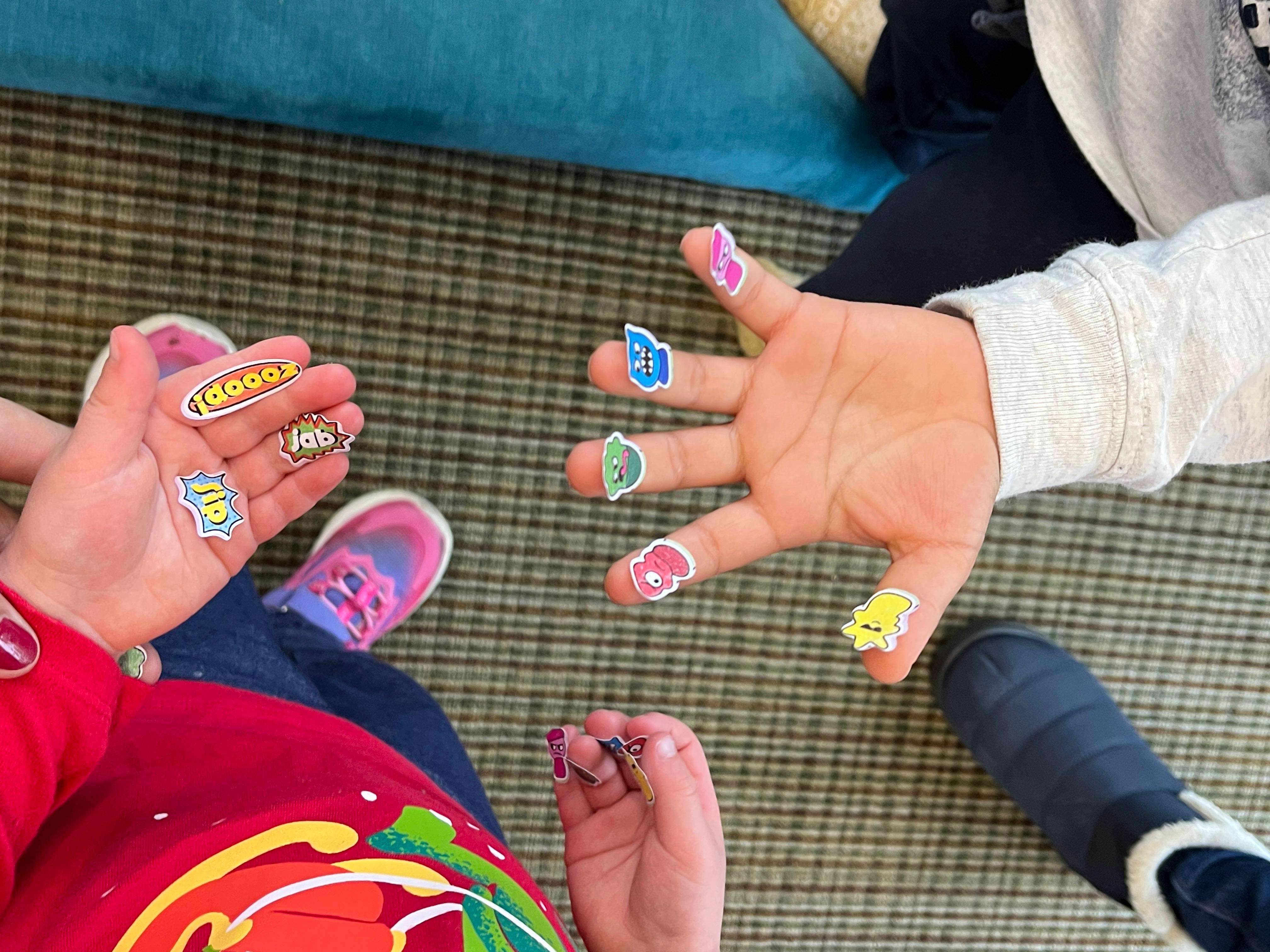
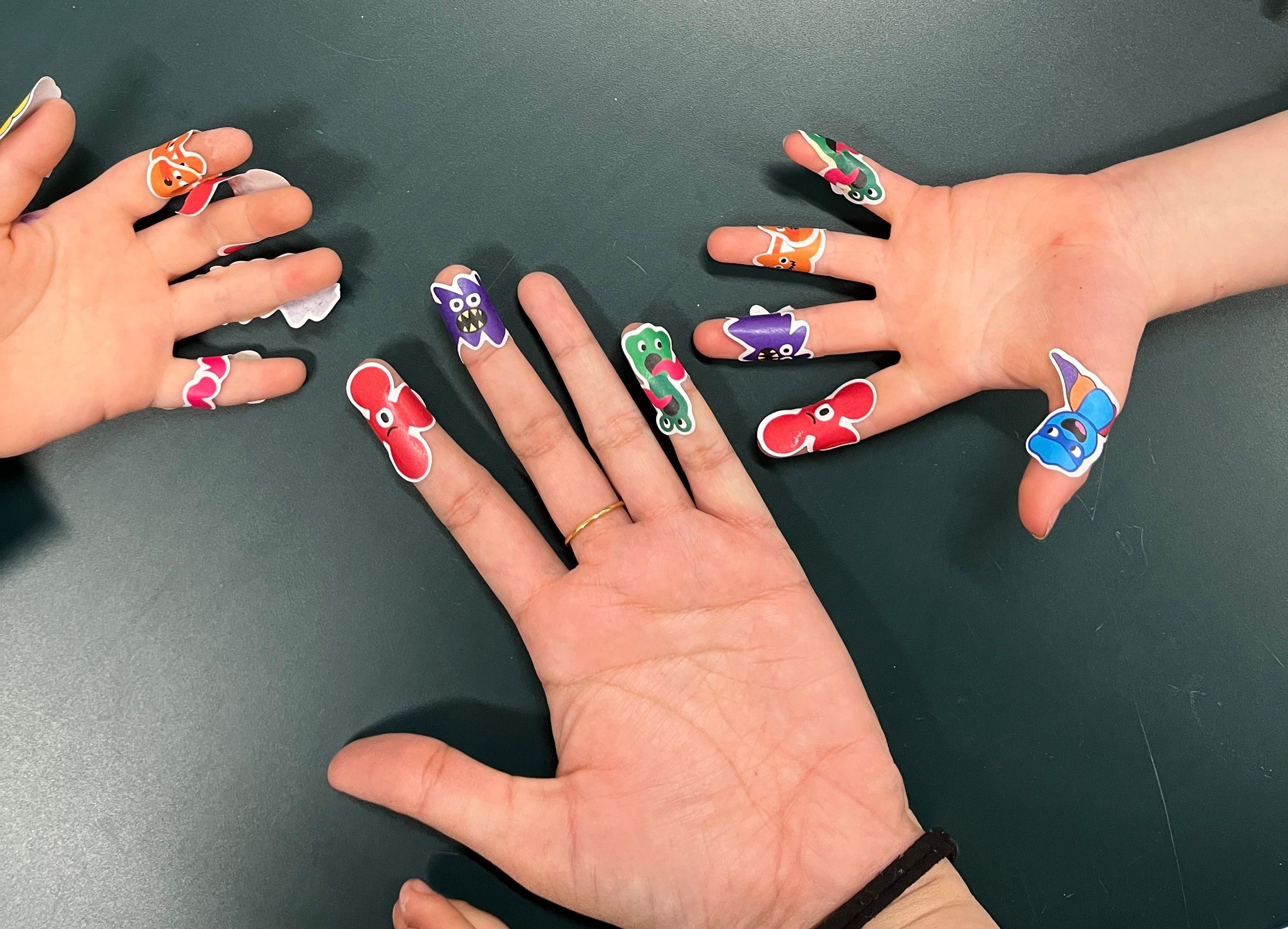
In the waiting room, kids receive finger-monster stickers. Parents and nurses guide “Fight the Jabs” by tapping or pinching fingers, turning the injection moment into playful distraction and shared story.
Zoop — Go
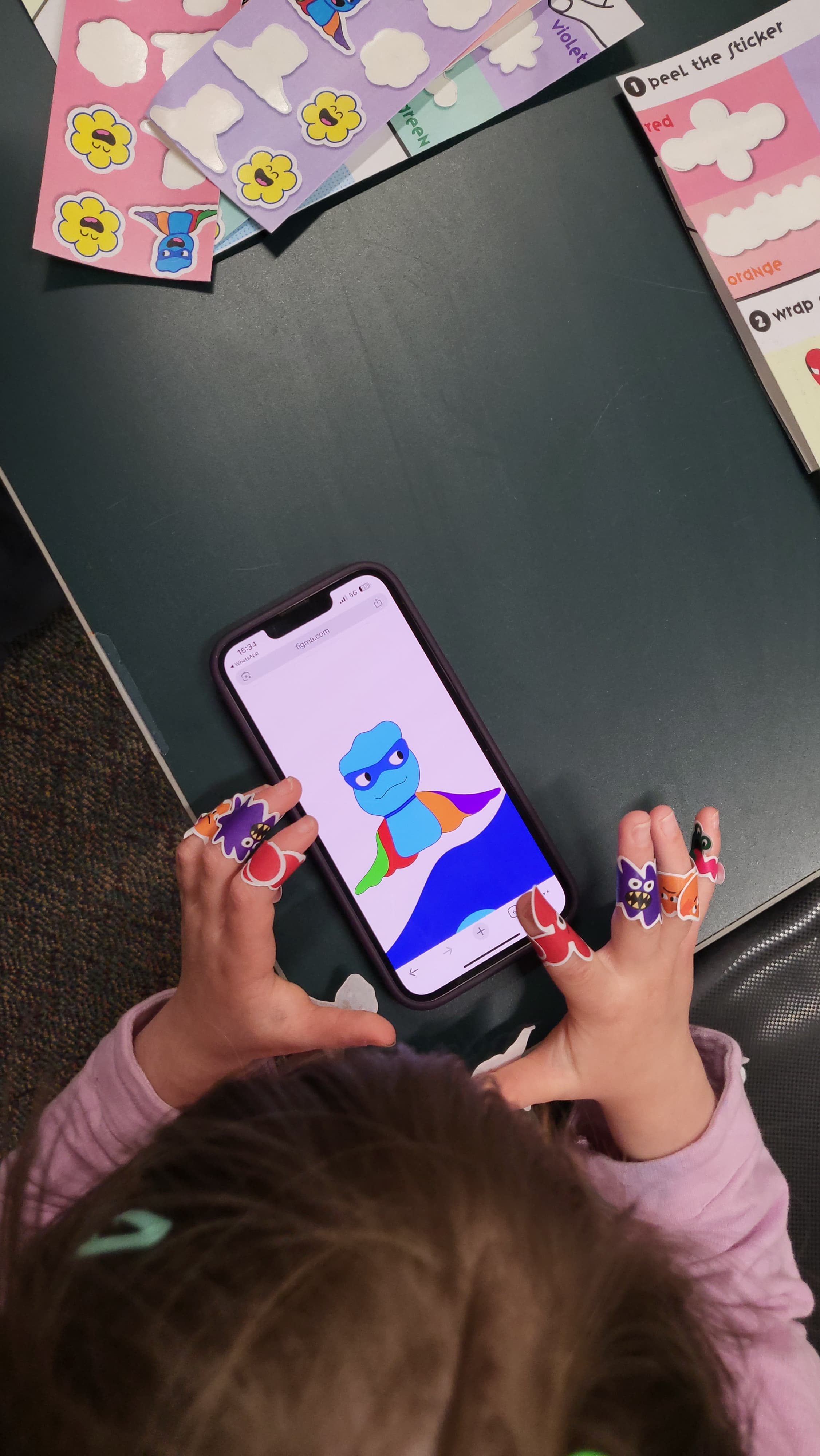
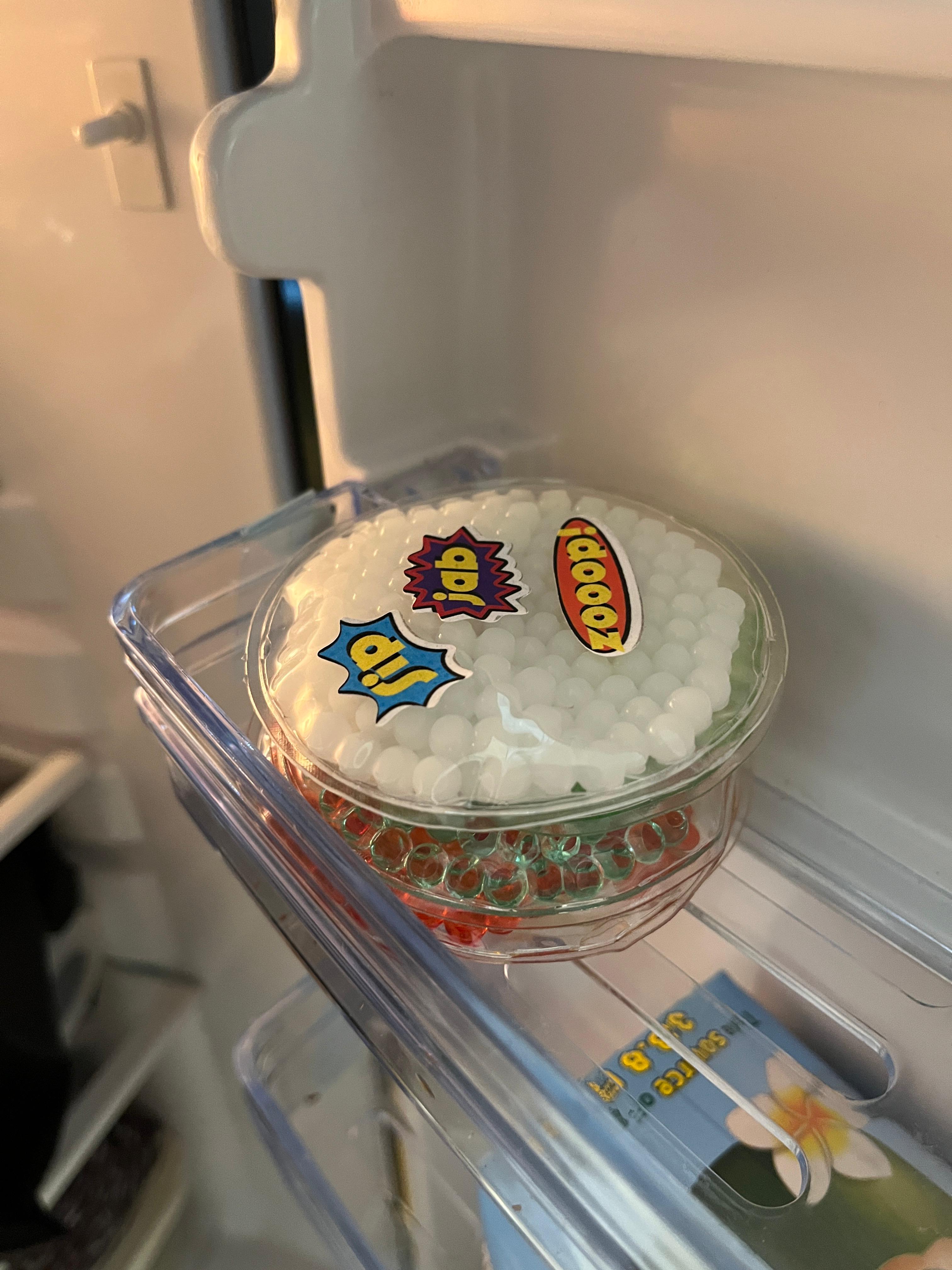
After the injection, the nurse gives Zoopy a superhero ice-pack. The child applies it as a reward ritual, reframing the experience around comfort and pride instead of fear or pain.
Sippy reminds to hydrate.
Jabs are monster stickers.
Zoopy is my superpower.
User Testing
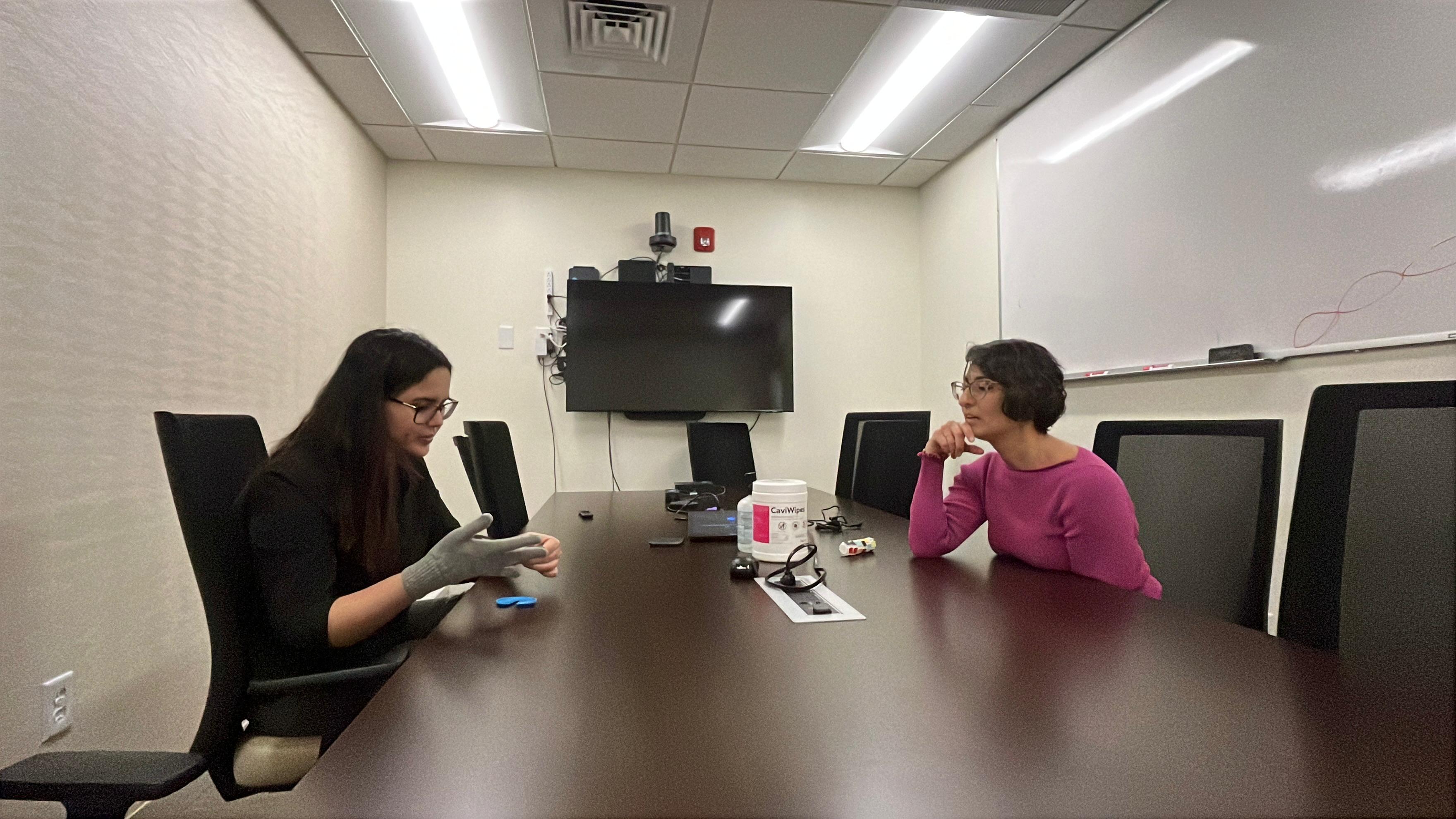
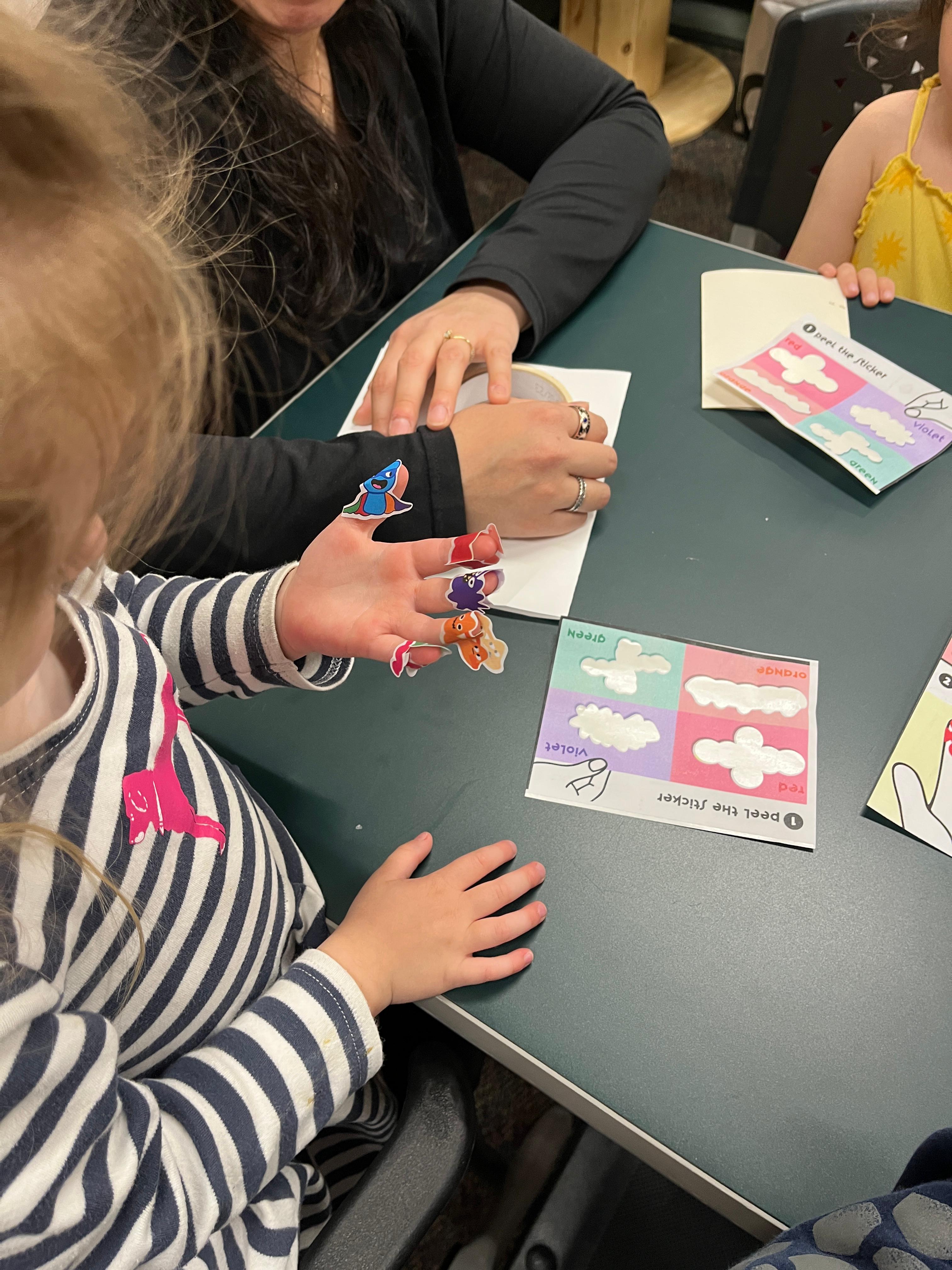
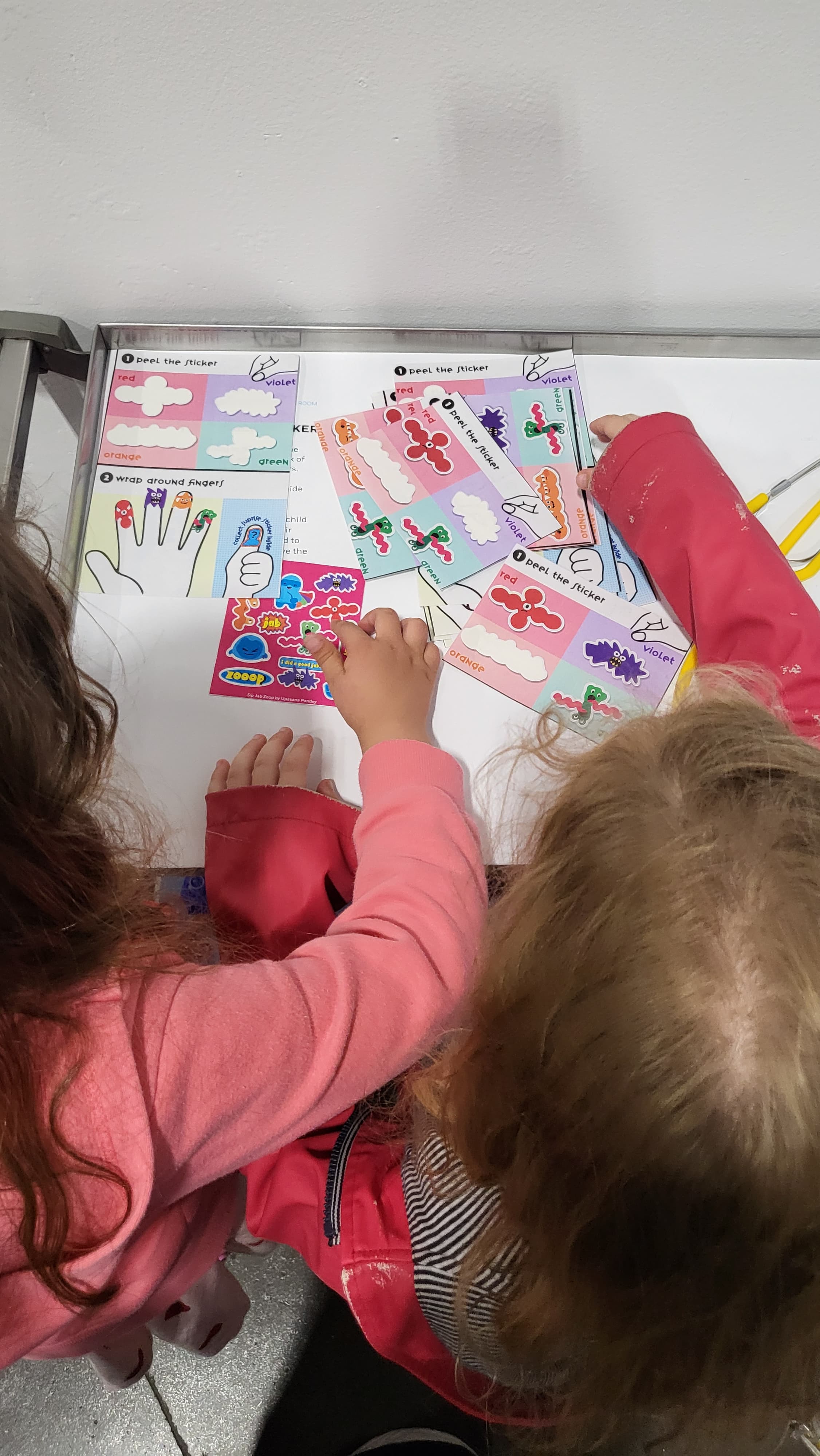
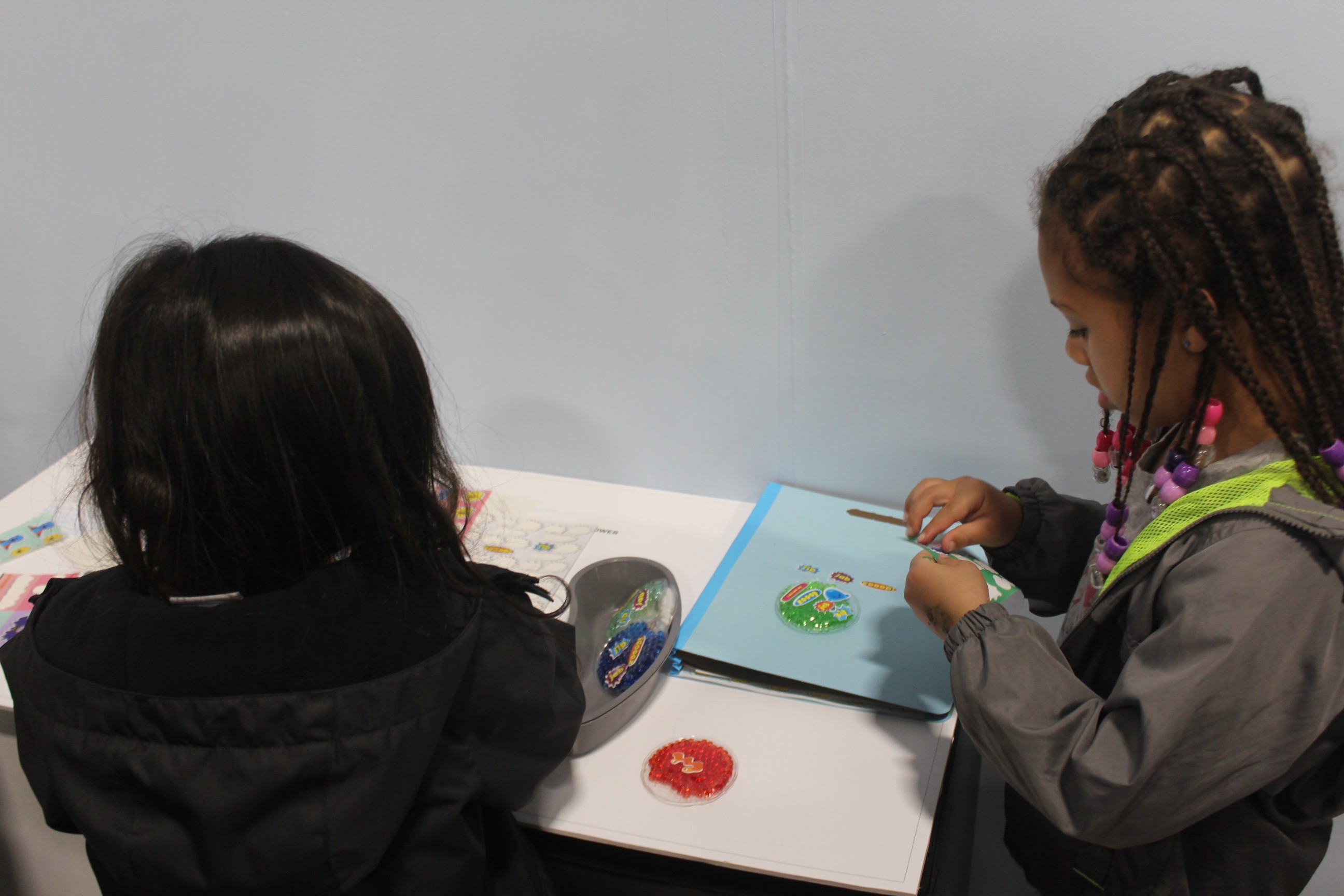
I conducted multiple rounds of user testing with children, parents, and clinicians.
Every design change was tested and refined with users.
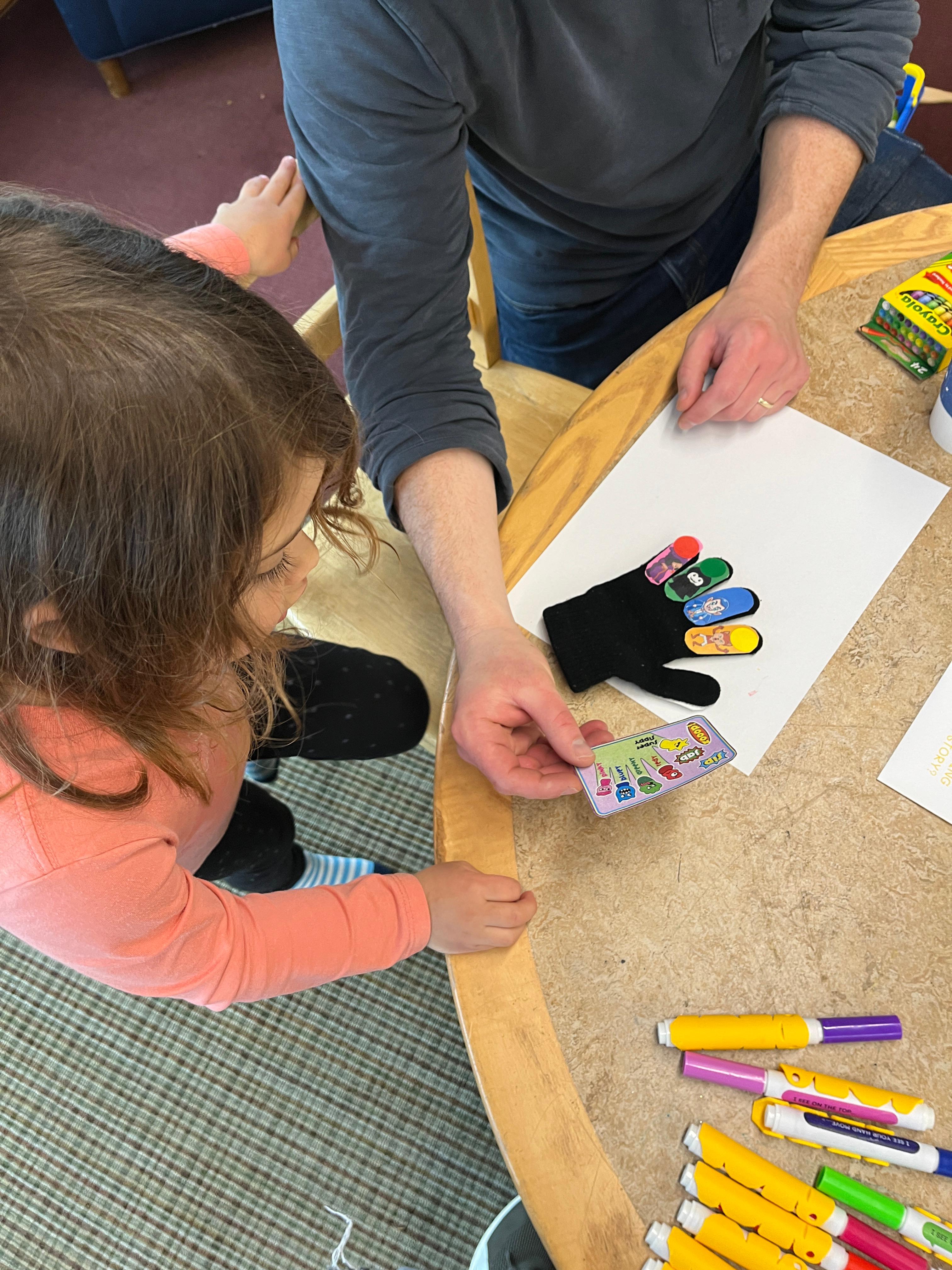
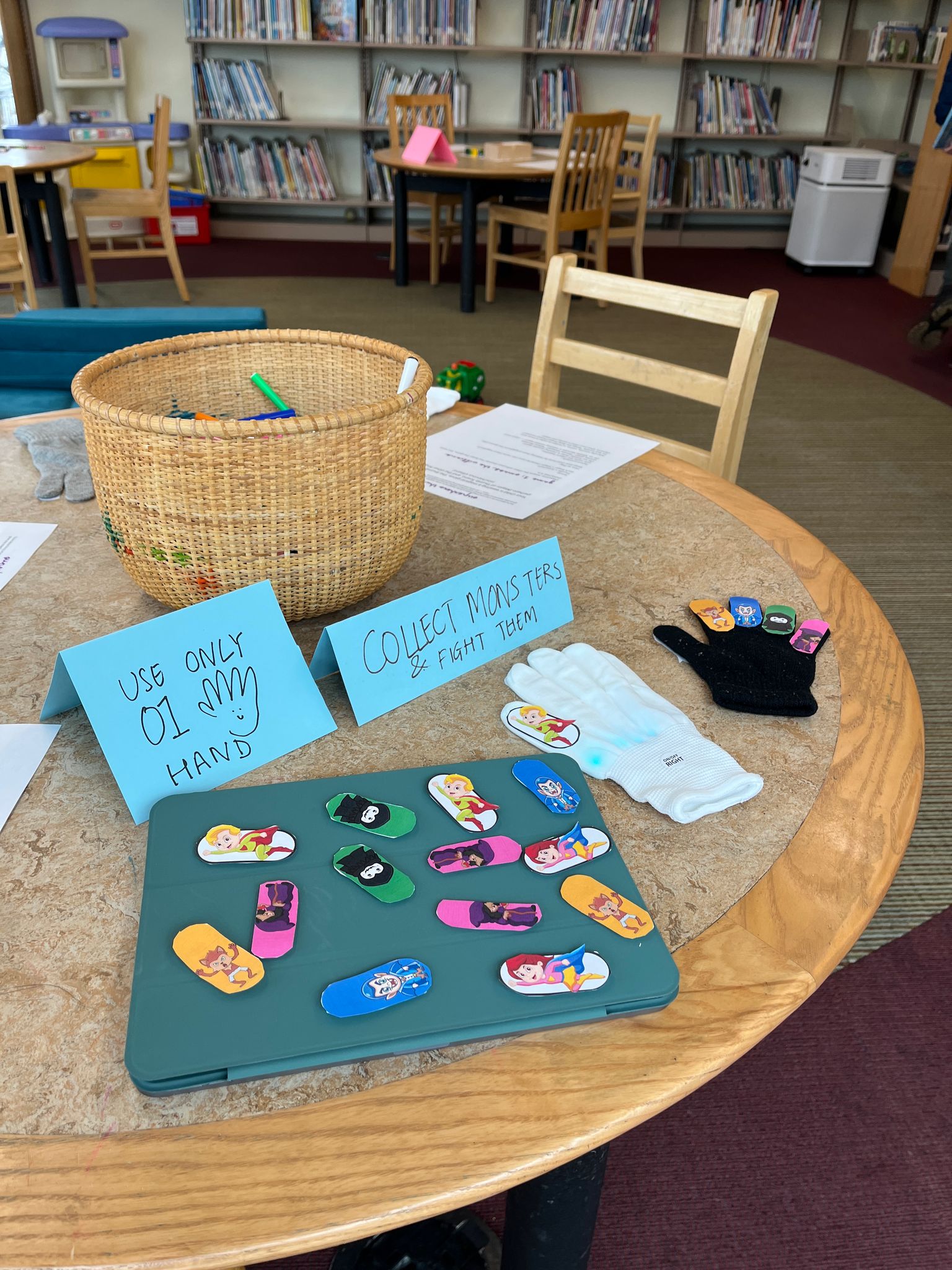
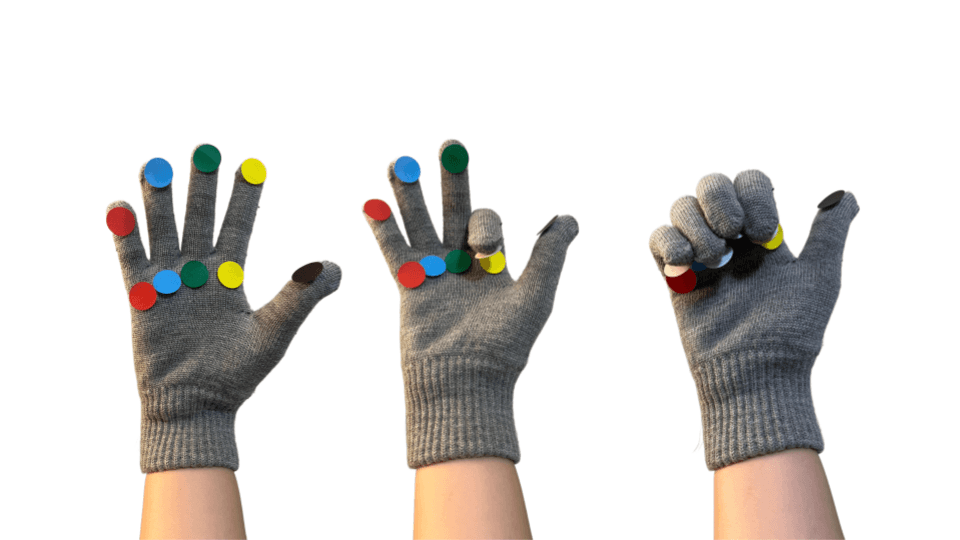
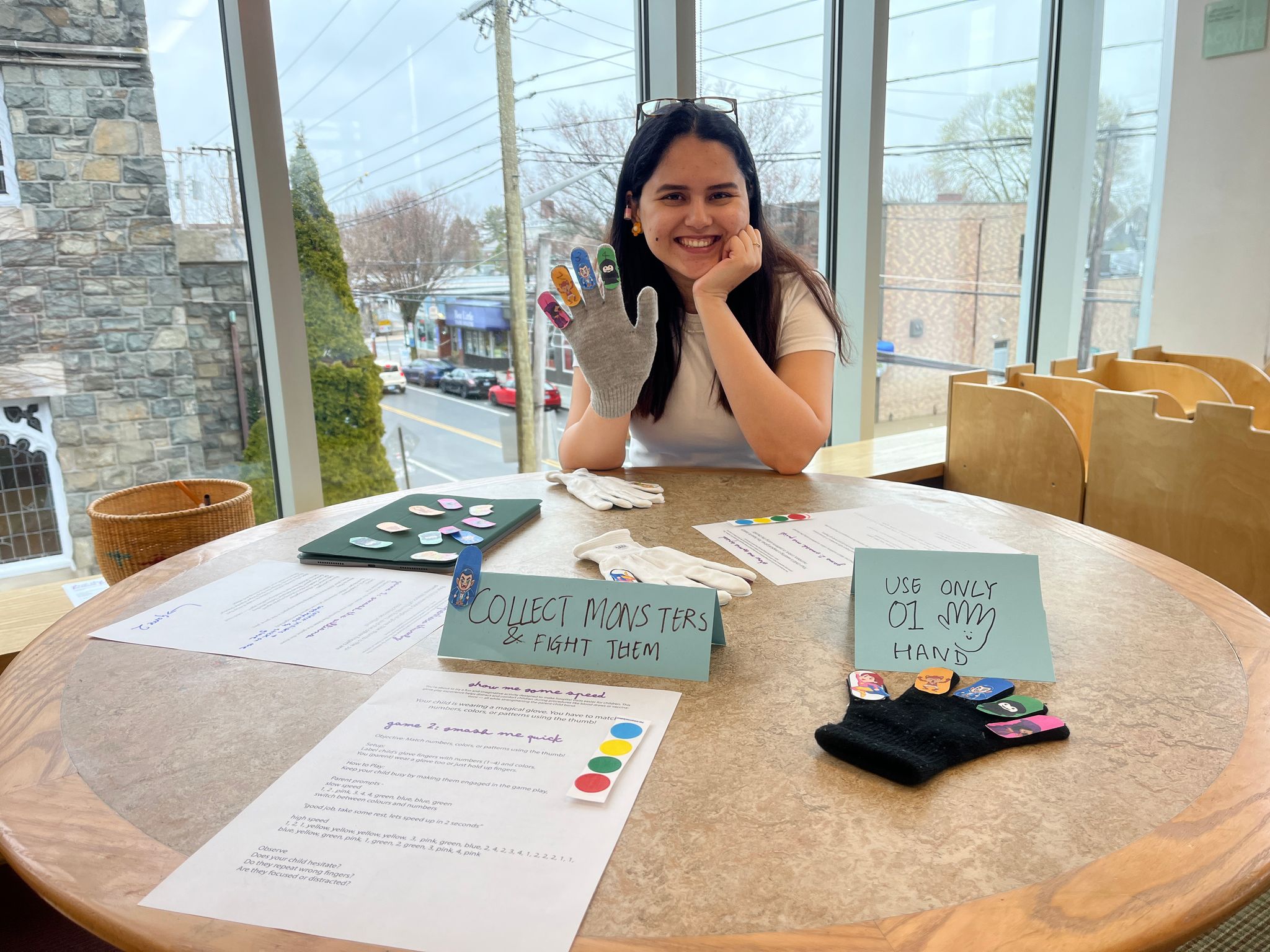
Initial Concept – Interactive Gloves
I first designed gloves with reattachable monster stickers. However, this created hygiene and logistics issues:
Who would clean the gloves?
Would clinics provide a new pair for every child?
How would storage and reuse work?
Because of these practical challenges, I eliminated the glove concept.
Refined Solution – Finger Stickers
I shifted to finger stickers. Clinics already give children stickers, so this fit naturally into existing workflows.
For clinics, it’s simply a small paper sticker to hand out. For children, it’s playful and disposable.
Design Decisions
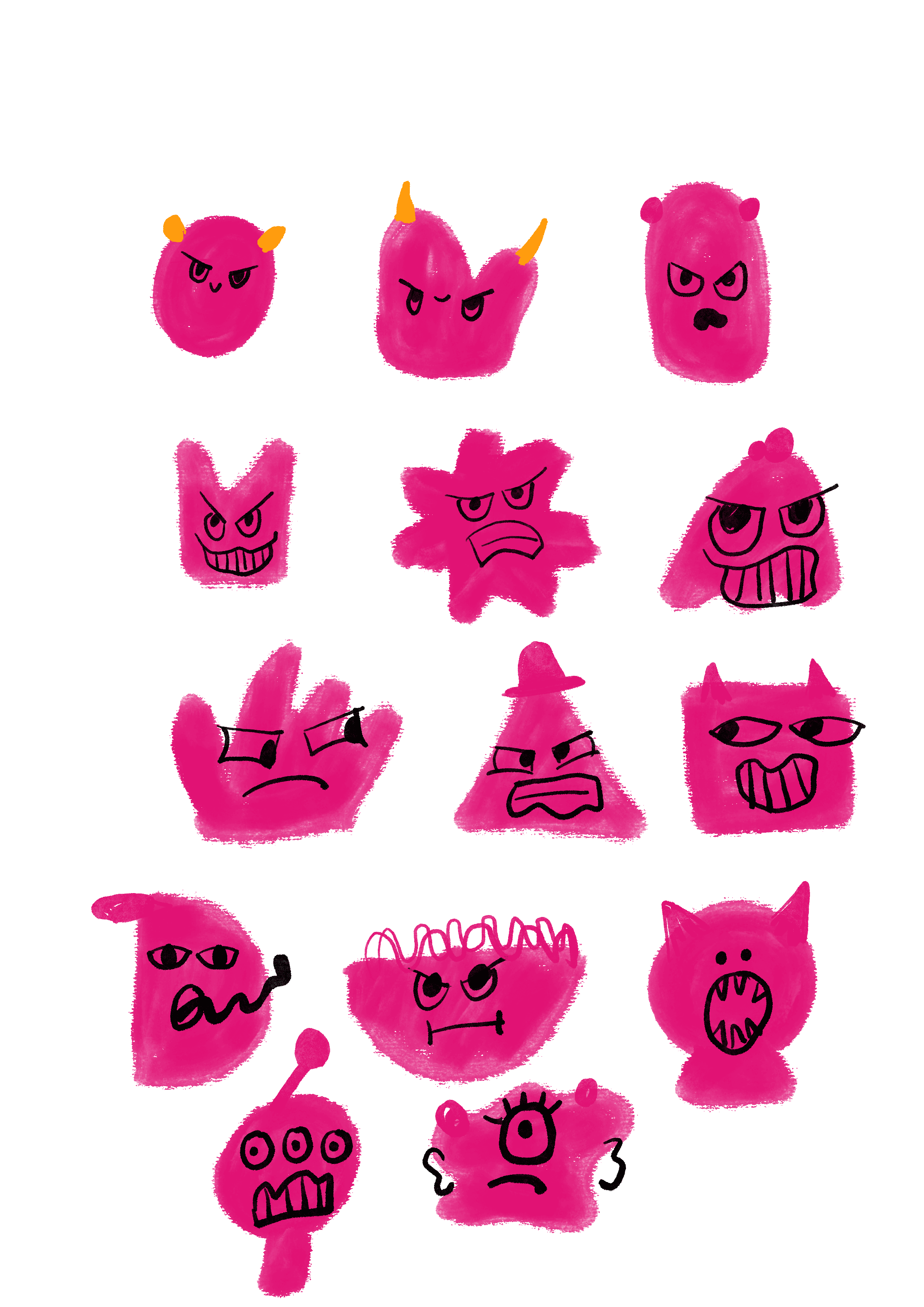
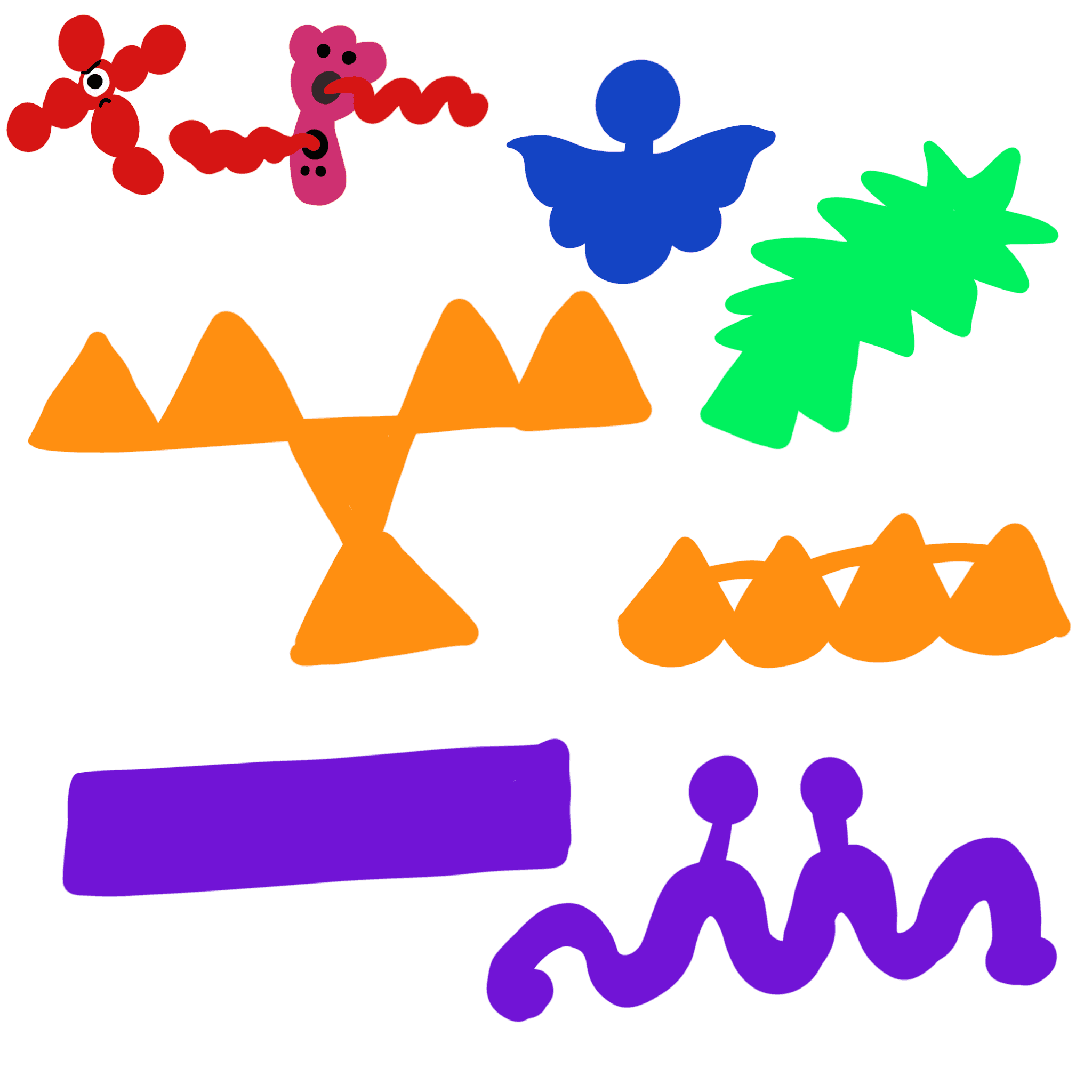
I avoided human-like characters to keep the monsters inclusive and universally relatable.
Designing for small fingers meant very small stickers.
Early standing monster designs were too tiny and often fell off during play due to limited surface contact.
This led to a key change:
The stickers needed to wrap around the finger, not sit on top of it.
I redesigned the monsters with wider bodies and longer arms that could “hug” the child’s finger for better grip and durability.
The System
Each part of the system is modular;
the success of one step does not depend entirely on the previous step.
Even if a parent books an appointment on the same day, they can still participate in the Jab/Zoop journey.
Even if a clinic does not have the facility to store ice packs, Sip/Jab elements still work effectively.
The Reward
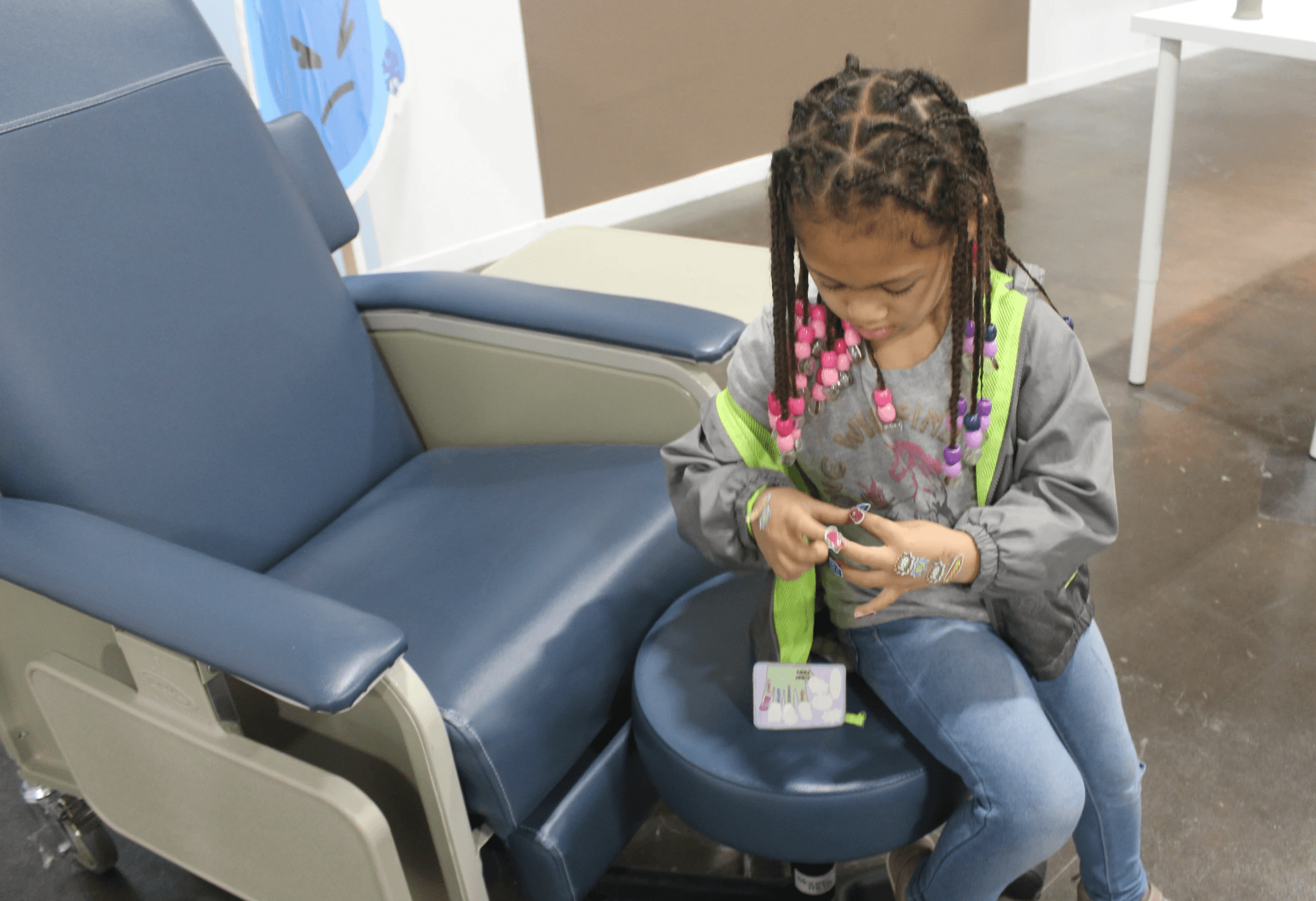
Childrens love stickers—and they get to keep them.
They leave the vaccination site with multiple stickers and a superhero ice pack.
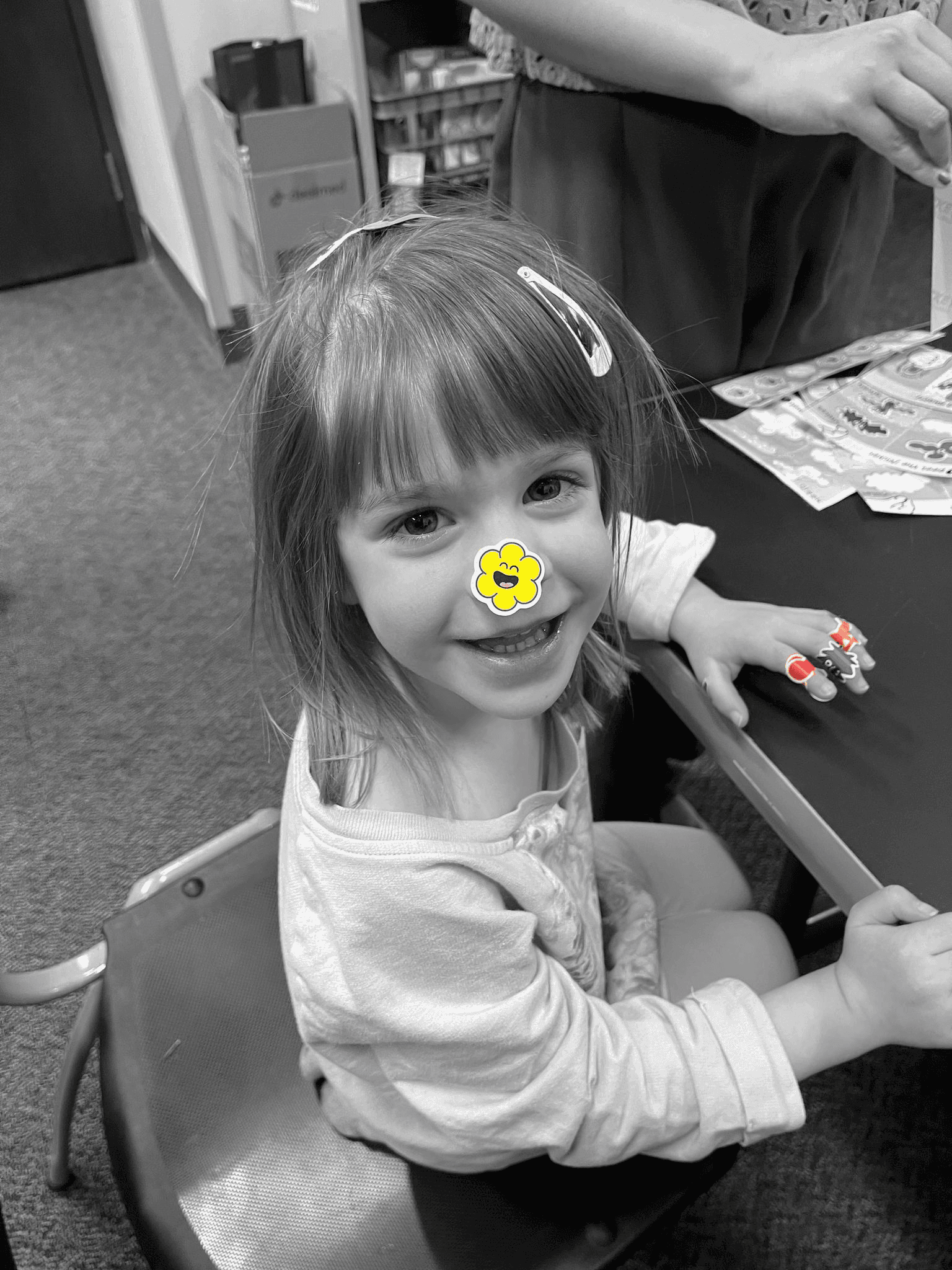
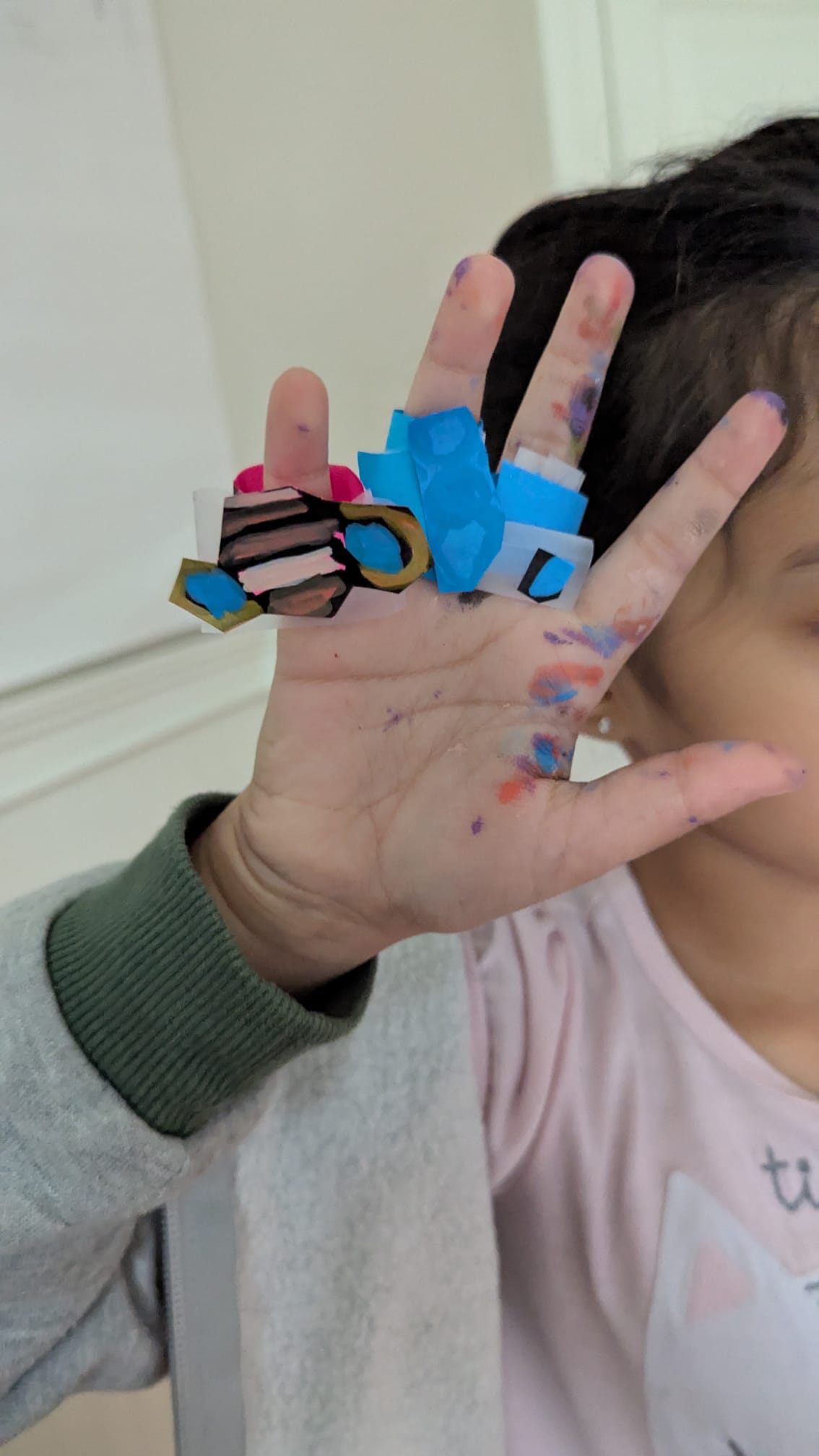
I noticed in user testing that children put these stickers on their book or on the art they were drawing. They kept matching the colours on their stickers with other objects around as well.
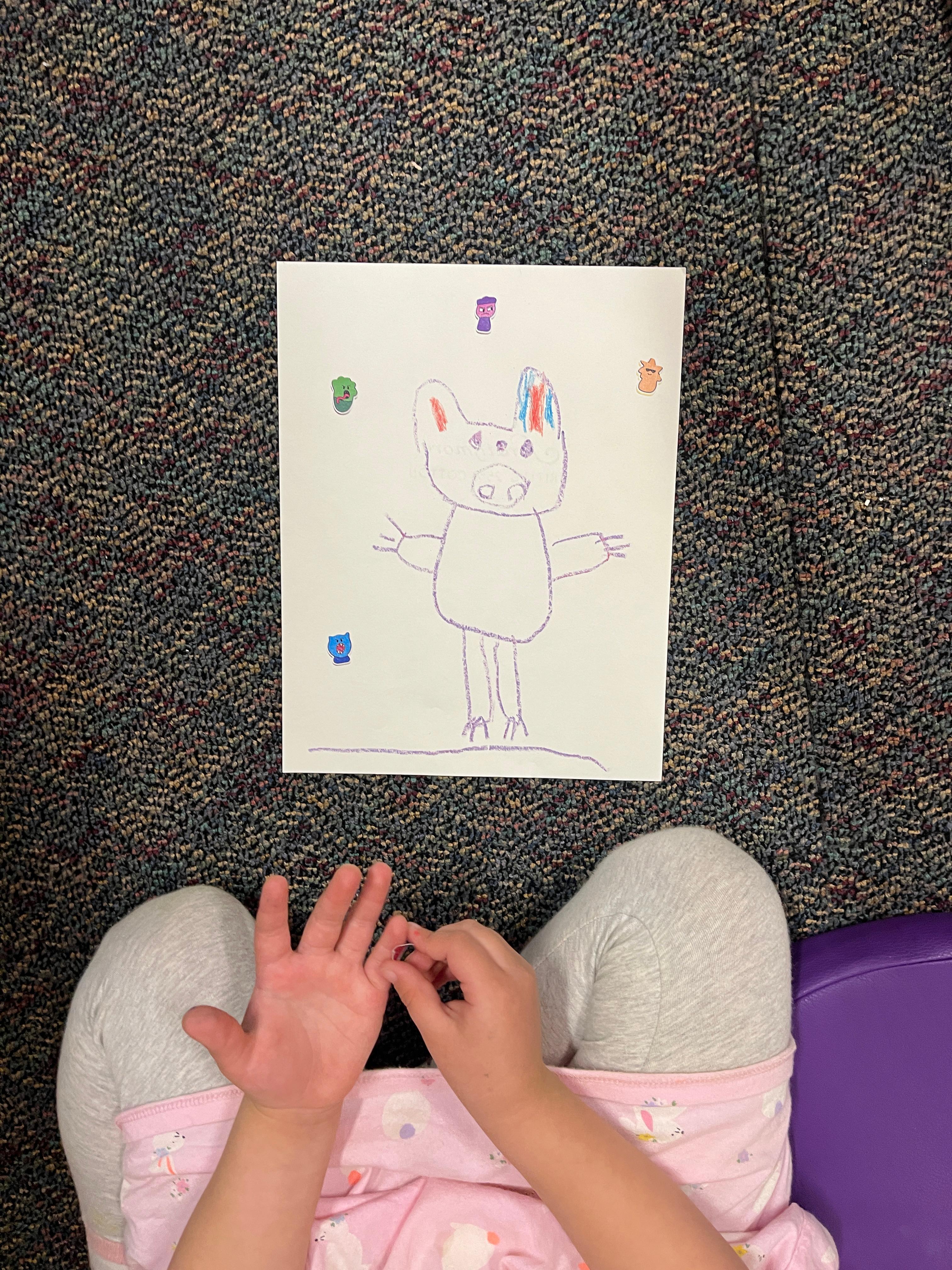
Ria added all her stickers on top her drawing because it made Peppa Pig look more "beautiful".
Siana made her own "solar system" finger stickers with tape and scissors at home.
Seema wanted to click a photo with Sippy because it made her "stronger".
“A product like this would act as a great connection builder between patients and providers as they can laugh and play something together.”
Dr. Anne Murray, MD - Providence Community Health Centers
Outcome
Sip Jab Zoop helps children stay calmer, improves cooperation during injections, and leaves them with a positive final memory. For clinicians, it adds emotional value without adding procedural complexity.
Why does it matters?
Sip Jab Zoop shows how joyful, system-level design can humanize healthcare experiences, especially for children - by working with existing medical practices instead of against them.
Reflection
Incorporating Joy in the Health Journey
Throughout this thesis journey, every design decision was rooted firmly in research. It acknowledges not just the patient but the parent, the nurse— the full human system.
It transforms an experience typically associated with fear into one associated with achievement, pride, and play.
"i got so many stickers"